Eventbrite is a full-fledged event management and ticketing service provider that enables creation, promotion, payment processing, and analytics for events of all sizes.
Since its launch, Eventbrite has processed more than two billion tickets globally. In 2024 alone, it sold 83 million paid tickets for over 4.7 million events worldwide. [1]
According to Enlyft, more than 24,300 companies have used Eventbrite, most of them being small businesses (with 1–10 employees and annual revenue between $1 million and $10 million).
While Eventbrite dominates the self-serve event organizer segment, several competitors are gaining ground by specializing in areas where Eventbrite has historically focused less, such as nonprofit fundraising events, local venue partnerships, global stadium-scale ticketing, and niche verticals like nightlife or sports.
Some platforms are shifting their focus toward hybrid and virtual experiences. They are offering built-in livestreaming, engagement analytics, virtual expo halls, and automated marketing workflows.
Below, I present the top Eventbrite competitors that excel in various niches, from enterprise conferences and local nightlife to ticket marketplaces and nonprofit event management.
Collectively, these alternatives increasingly appeal to organizers who need more customization, lower fees, stronger marketing tools, or access to different attendee demographics.
Did you know?The online event ticketing market size is projected to exceed $102.7 billion by 2030, growing at a CAGR of 3.8%. Music concerts and festivals make up over 36% of this market and are growing at a CAGR of about 4%. [2]
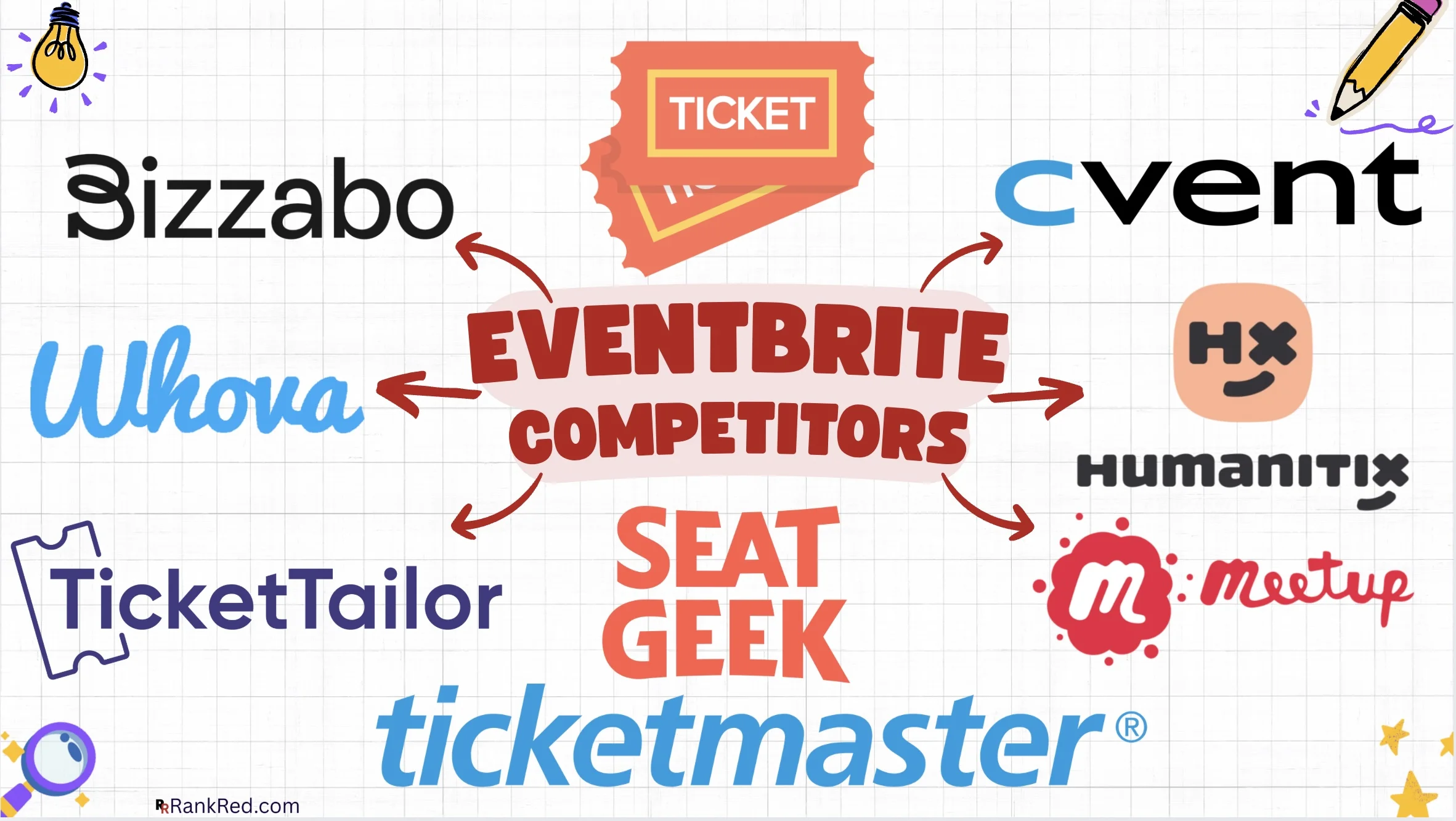
Table of Contents
14. Brown Paper Tickets
Founded in 2003Headquarters: Seattle, US
Pricing: $1.49 + 6.0% of the ticket price
Competitive Edge: Community-first business philosophy
Brown Paper Tickets allows organizers to create event pages, list ticket types, sell tickets online or in person, accept various payment methods, and offer mobile or print-at-home tickets.
It plays well for local and grassroots events, arts and community gatherings, fundraisers, spoken-word or indie performances, and small conferences where simple ticketing and registration tools are important.
The platform is especially popular among independent theaters, small music venues, dance organizations, schools, cultural nonprofits, and DIY event producers who need low-cost ticketing without complex onboarding. Its approach resonates with organizers who prefer a straightforward setup, transparent pricing, and attentive customer service.
13. See Tickets by Eventim
Founded in 1991Headquarters: Sydney, Australia
Tickets Sold: 20 million+ annually
Competitive Edge: Strong presence in live entertainment & festivals
See Tickets is a multinational live-event ticketing services provider that offers comprehensive ticketing technology, sales distribution, and marketing solutions for a range of events, including concerts, sports, theatre, festivals, and exhibitions.
The company has a strong presence in Europe and North America. Over the years, it has supported thousands of organizers and processed tens of millions of tickets. A major milestone came in 2015 when it handled 150,000 tickets for the Glastonbury Festival, selling out in record time. This showcased the platform’s ability to perform reliably even during heavy demand.
Today, the company generates more than $1 billion in annual sales, supports over 8,000 venues, festivals, and events, and sells nearly 20 million tickets each year.
In 2024, it was acquired by CTS Eventim AG (a leading German live-entertainment and ticketing company) for approximately €300 million. Following the acquisition, See Tickets’ US operations were rebranded as Eventim USA, aligning North American efforts with the broader Eventim network and enhancing integration with international ticketing resources.
12. Zeffy
Headquarters: Montreal, Canada
Raised: $1 billion+
Competitive Edge: Built for nonprofit events and fundraising workflows
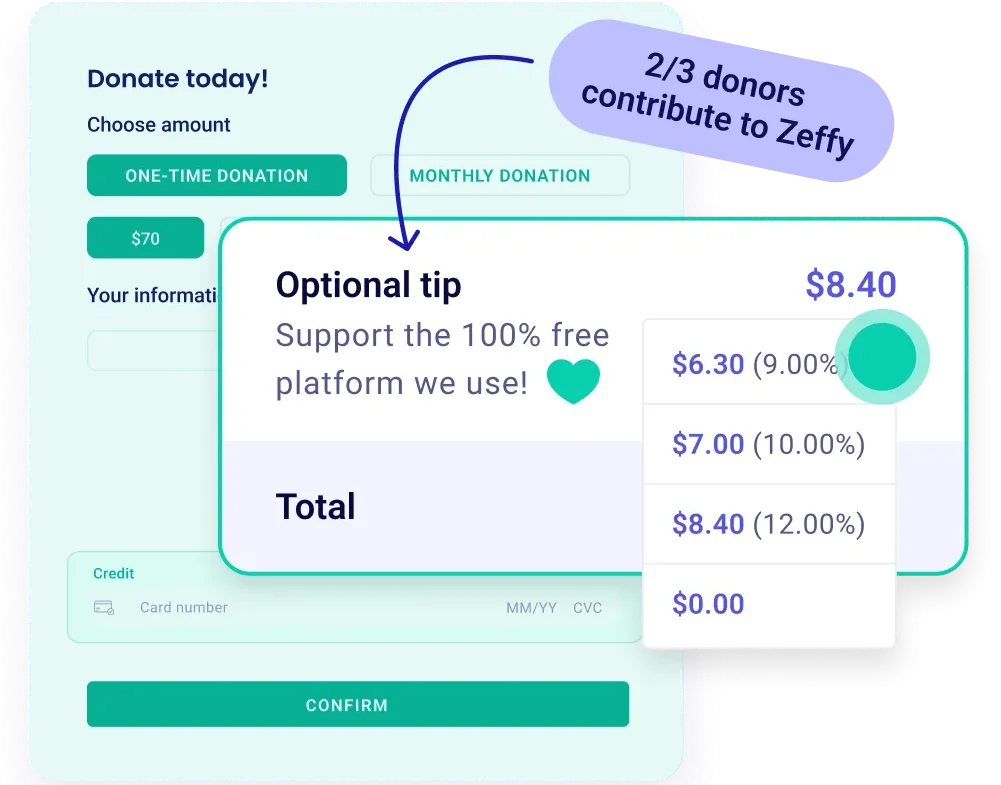
Zeffy is one of the fastest-growing 100% free fundraising and event-ticketing platforms designed specifically for nonprofits, community organizations, schools, charities, and volunteer-led groups. It enables nonprofits to sell tickets, run fundraising campaigns, collect donations, and manage events using its powerful, easy-to-use online tool.
The company operates using a voluntary donor-supported model, where the platform is funded entirely by optional contributions made during checkout.
Beyond ticket sales, the platform offers features such as customizable event registration forms, multiple ticket types, mobile-friendly checkout, QR code check-ins, real-time reporting, and attendee tracking — all geared toward nonprofit-led events and fundraisers.
Zeffy supports more than 50,000 nonprofits worldwide and has helped charities raise over $1 billion through its platform. It has enabled more than 200,000 fundraising campaigns and saved nonprofits over $50 million in fees.
11. Humanitix
Founded in 2016Headquarters: Sydney, Australia
Donated: $16.5 million+
Competitive Edge: Social impact, Lower fees, and Community trust
Humanitix is one of the most unique and socially impactful ticketing platforms in the global events industry. It channels 100% of its booking-fee profits into educational programs for disadvantaged children.
Humanitix has donated more than $16.5 million since its founding, including a major $10 million contribution in 2024 alone. By using booking fee profits, the platform funds global education, healthcare, and basic needs. It has already supported millions of days of schooling and aims to donate $100 million per year by 2030.
It has seen particularly strong adoption in Australia, New Zealand, the United States, and expanding global regions. Its event categories range from conferences, workshops, charity events, school events, seminars, festivals, and community gatherings to mid-sized corporate activities.
The platform offers a polished, modern event-management interface that includes customizable event pages, powerful analytics, ticket-scanning apps, donation tools, seating maps, and multi-tier ticketing.
Despite being a nonprofit, Humanitix invests heavily in technology, often outperforming commercial rivals in customer support and user experience.
10. Eventbee
Headquarters: San Francisco, California, US
Pricing: $1 – $2.5 per ticket
Competitive Edge: Flat, predictable per-ticket fees
Eventbee is a long-standing low-cost event-ticketing platform known for pioneering a flat-fee per-ticket pricing model. It charges $1 per ticket for basic ticketing, with higher tiers ($1.50 – $2.50 per ticket) available for additional features.
The platform emphasizes minimizing ticketing costs and providing flexibility for events of all types, from community gatherings and workshops to small concerts and charity fundraisers.
In 2024, they introduced a 1% attendee booking fee on total purchases to offset rising operating costs, while still maintaining flat service fee pricing for organizers and flexible fee collection options.
Besides attractive pricing, Eventbee’s platform supports custom event pages with branding, dynamic registration forms, multiple ticket types (general admission / reserved seating), email confirmations, social sharing tools, and attendee management dashboards. Organizers can also choose from multiple payment processors and receive funds immediately as tickets sell.
Eventbee is trusted by more than 100,000 event managers worldwide. So far, it has sold over 30 million tickets and supports payments in more than 40 currencies.
9. SeatGeek
Founded in 2009Headquarters: New York City, US
Ticket Sales Volume: $1 billion+ per annum
Competitive Edge: Deal Score algorithm & Data-driven pricing tools
SeatGeek is a live entertainment ticketing platform and marketplace that makes it easy for fans to discover, buy, and sell tickets for live events like sports games, concerts, and theater shows.
It was originally launched as a secondary ticket search engine but gradually evolved into a full-service ticketing destination, blending secondary marketplace features with primary ticketing technology.
SeatGeek aggregates listings from multiple sources and applies intelligent technology, such as its proprietary Deal Score algorithm, which rates ticket offers based on price and seat value. [3]
It combines intuitive search, mobile-first purchase flows, interactive seat maps, payment options like Apple Pay, and integrations (e.g., Lyft and Snapchat) to enrich the fan experience.
In recent years, the company has expanded its primary ticketing deals with major sports organizations, including agreements with NFL teams, LPGA, and PGA of America — boosting its profile as a true competitor to dominant ticketing ecosystems.
In 2024, they launched SeatGeekIQ, an AI-powered marketplace intelligence engine developed to optimize ticket pricing and distribution. This helps both sellers and buyers make better decisions in real time using data-driven strategies.
8. Universe
Headquarters: Toronto, Canada
Pricing: 2.5% + $1.99 per ticket (Capped at $19.95)
Competitive Edge: Strong customization, Focus on high-volume ticketing
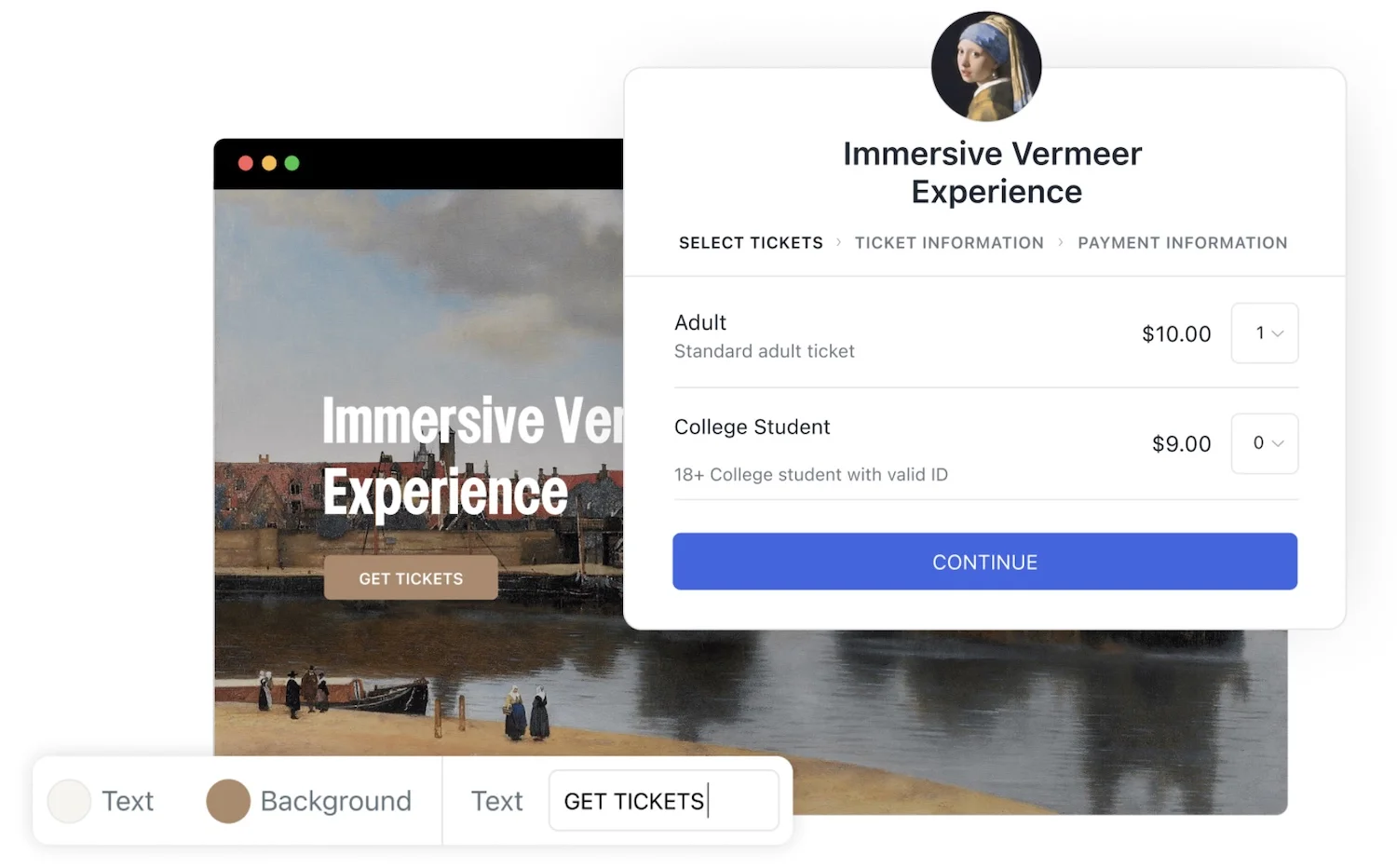
Universe is a cloud-based ticketing and event platform that allows event organizers to create, sell, and manage tickets for in-person, online, and hybrid events. It is part of the broader ticketing ecosystem and is backed by Live Nation Entertainment/Ticketmaster, which gives it access to vast infrastructure and promotional reach.
The platform supports a wide range of ticketing features, including customer event pages, multiple ticket types, real-time sales dashboards, embedded widgets, and mobile check-in tools. This helps organizers handle everything from local community meetups to large-scale public festivals and concerts.
Its technology stack enables it to process high-volume ticket drops, making it attractive to nightlife promoters, festival producers, and touring event organizers. Plus, it supports modern ticketing needs such as QR-code tickets, mobile check-in, timed entry, seating layouts, and ticket bundles.
Universe competes directly with Eventbrite in the self-service and mid-market ticketing segment, particularly for organizers who want more control over branding, lower fees, and deeper customization than what Eventbrite’s default marketplace offers. [4]
7. Eventzilla
Founded in 2009Headquarters: Dublin, Ohio, US
Registrations Processed: 7 million+
Competitive Edge: Strong virtual & hybrid event capabilities
Eventzilla is a robust cloud-based event registration, ticketing, and management platform that allows organizers to handle all types of events, from conferences, fundraisers, and classes to virtual/hybrid events and networking experiences.
It combines registration, attendee management, engagement tools, and check-in solutions within a single application, making it a flexible choice for both small events and mid-market organizations.
It also supports virtual and hybrid events, allowing event hosts to expand beyond in-person formats through livestreaming, virtual engagement tools, and integrations.
The platform supports more than 50,000 organizers worldwide and has helped create over 200,000 event websites. To date, it has processed more than 7 million registrations.
Compared to Eventbrite’s large marketplace, which brings exposure to public events, Eventzilla is preferred by organizers who already have an audience and need lower fees, better control, and more robust management tools.
6. Meetup
Founded in 2002Headquarters: New York City, US
Users: 60 million+
Competitive Edge: Built-in community discovery & network effects
Meetup is one of the world’s largest community-building and group-event platforms, designed to help people form interest-based groups and attend real-world gatherings.
Its core philosophy is centered around local connection: bringing together people who share interests ranging from fitness and tech to hobbies, wellness, entrepreneurship, language learning, and more.
The platform has more than 60 million registered users worldwide, connecting people in 10,000 cities across 190+ countries through shared interests. Every month, millions join events covering everything from hobbies like photography to professional networking.
Compared to Eventbrite, which focuses heavily on ticketing and public events, Meetup focuses on group-building and recurring engagement. The two platforms intersect whenever organizers want to host regular classes, hobby sessions, club meetings, networking events, or educational meetups.
Meetup operates on a subscription model for group organizers, known as “Meetup Organizers.” These organizers pay a monthly or annual fee to run their groups, while attendees typically join for free (though some events may include costs or optional contributions). As of today, there are over 300,000 groups on the platform. [5]
5. Ticket Tailor
Headquarters: London, UK
Events conducted: 80,000+
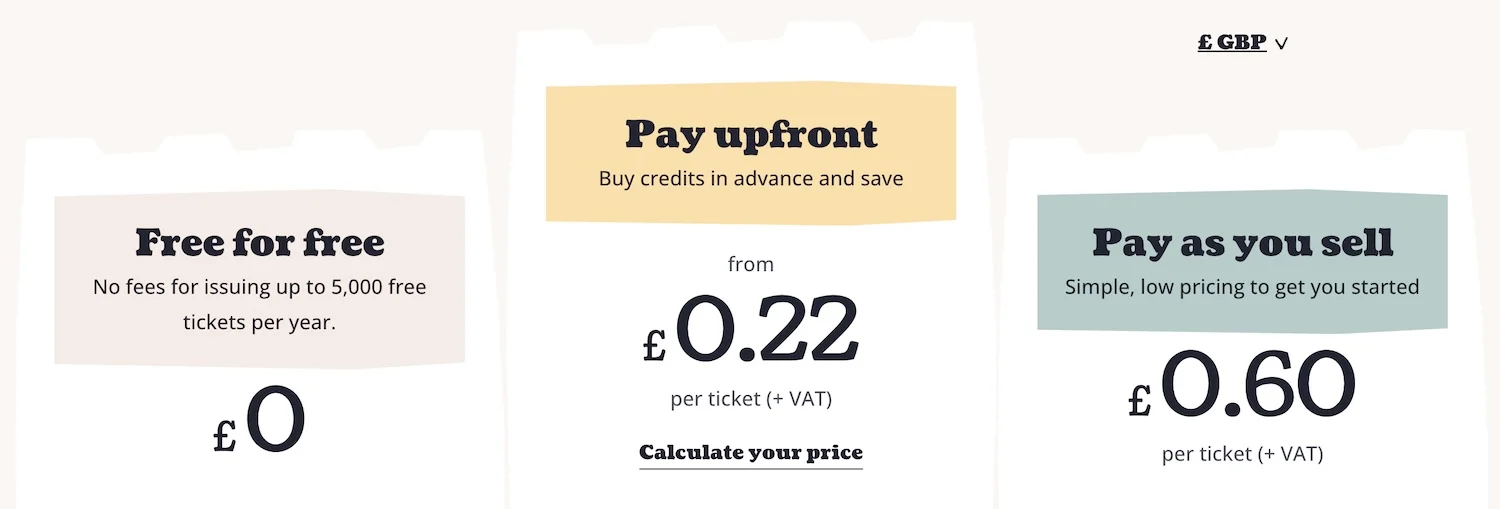
Competitive Edge: Ultra-low flat fees
Ticket Tailor is a user-friendly online ticketing platform designed to help organizers sell tickets to events of all sizes with simple setup, transparent pricing, and powerful customization tools.
Unlike many ticketing platforms that charge a percentage of ticket sales, Ticket Tailor uses a flat fee per ticket sold, making it especially attractive to event creators looking to minimize costs and retain more revenue.
It is especially popular among creators hosting charity events, theaters, workshops, comedy shows, pop-up markets, expos, and local festivals, where budget constraints are critical.
Despite operating with a relatively small team (about 35 employees), Ticket Tailor has built a robust platform that includes ticketing, event pages, check-in tools, recurring event setups, and embeddable widgets for websites. This platform also integrates with marketing, CRM, and payment tools, enabling organizers to build a simple yet effective event management workflow.
As an independent, certified B Corporation, Ticket Tailor emphasizes ethical business practices, such as carbon-neutral ticketing and donations to climate causes for every ticket sold. The platform has been used by over 80,000 event organizers in 188+ countries, helping them sell more than 30 million tickets to date.
4. Whova
Founded in 2012Headquarters: San Diego, California, US
Events conducted: 55,000+
Competitive Edge: Best-in-class mobile event app
Whova is one of the most widely adopted all-in-one event management and attendee engagement platforms, particularly well-known in the academic conference, nonprofit, corporate seminar, and professional education sectors.
The company’s mission is to “revolutionize attendee engagement and simplify event execution” by creating software that extends interaction beyond the event itself.
One of Whova’s biggest strengths is its award-winning mobile event app, considered one of the most feature-rich in the industry. It supports event agendas, attendee networking, speaker profiles, discussion boards, messaging, exhibitor listings, digital business cards, and real-time announcements.
So far, Whova has supported more than 55,000 events in 105 countries, serving over 10 million attendees. The platform consistently receives high ratings (often 4.8 out of 5), showing strong customer satisfaction with its features, support, and ease of use for in-person, virtual, and hybrid events. [6]
3. Bizzabo
Headquarters: Virginia, US
Clients: 1,600+
Competitive Edge: Deep event marketing & analytics
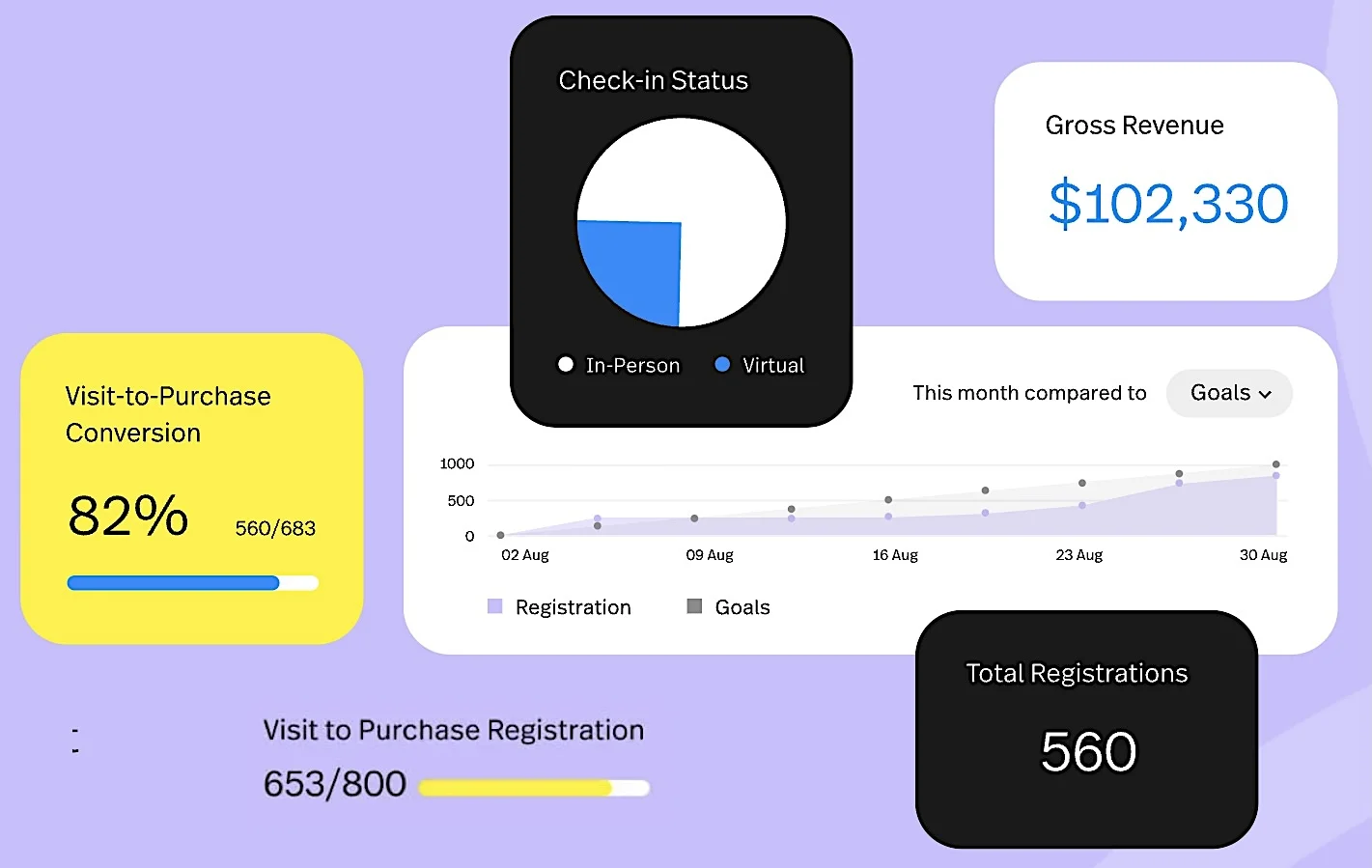
Bizzabo is a modern event experience operating system developed to help organizations create, manage, and measure in-person, virtual, and hybrid events across industries, from B2B conferences to multi-day enterprise gatherings.
At its core, Bizzabo focuses on attendee engagement, event marketing, analytics, and smooth event execution. The company has invested heavily in live-streaming integrations, virtual auditoriums, digital networking, and interactive tools like Q&A, chat, polls, and virtual expo booths. This gives event teams a single, integrated platform instead of having to combine multiple standalone tools.
Financially, the company has shown steady growth. It brings in around $51 million in annual revenue, has raised nearly $194.5 million in funding, and employs about 220 people.
In 2025, Bizzabo emphasized its AI strategy by integrating AI into its Event Experience OS, including AI-powered networking suggestions, automated agenda recommendations, and content personalization, to maximize engagement and ROI for planners. [7]
2. Cvent
Headquarters: Virginia, US
Customers: 24,000+
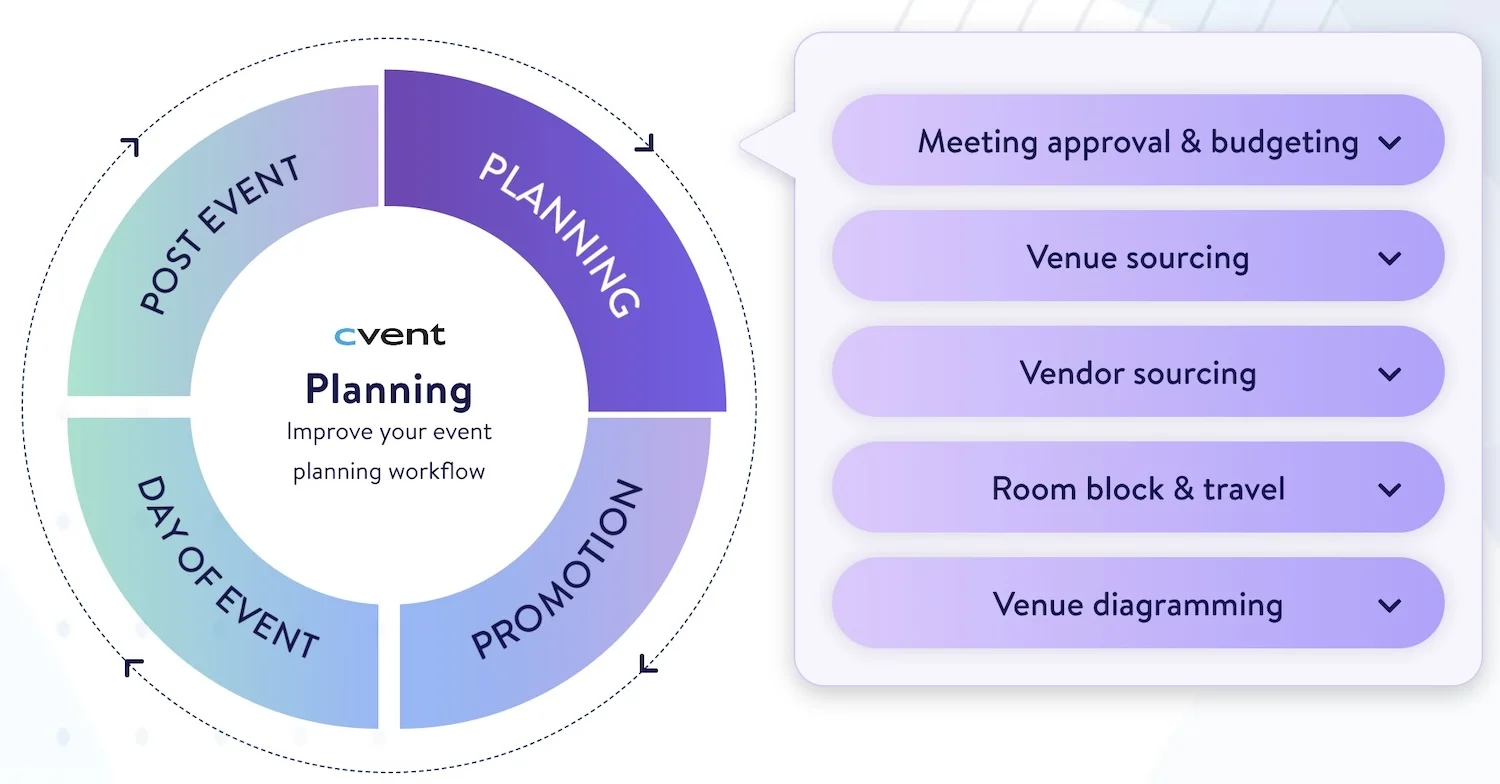
Competitive Edge: End-to-end event lifecycle coverage
Cvent is the world’s most prominent enterprise-level event management platform, serving corporations, government agencies, universities, and large-scale conference organizers.
Unlike consumer-focused ticketing platforms, it operates in the enterprise event-tech sector, which commands far higher contract values and deeper software integration.
The platform automates and simplifies complex event processes, from budgeting and registration to venue sourcing and post-event analytics. It supports in-person, virtual, and hybrid events, helping planners deliver engaging experiences while tracking ROI and attendee behavior.
Their venue sourcing marketplace (which features 340,000+ venues) connects planners directly with hotels and meeting venues. This makes it easier to request proposals and secure bookings, giving them a strong and unique advantage in the industry.
Cvent is widely used by Fortune 100 companies and many large corporations worldwide. It has managed over 7 million events and processed more than 315 million registrations to date. In 2025, Cvent was (again) recognized as a Leader in the Gartner Magic Quadrant for Event Marketing and Management Platforms. [8]
1. Ticketmaster
Headquarters: Beverly Hills, California, US
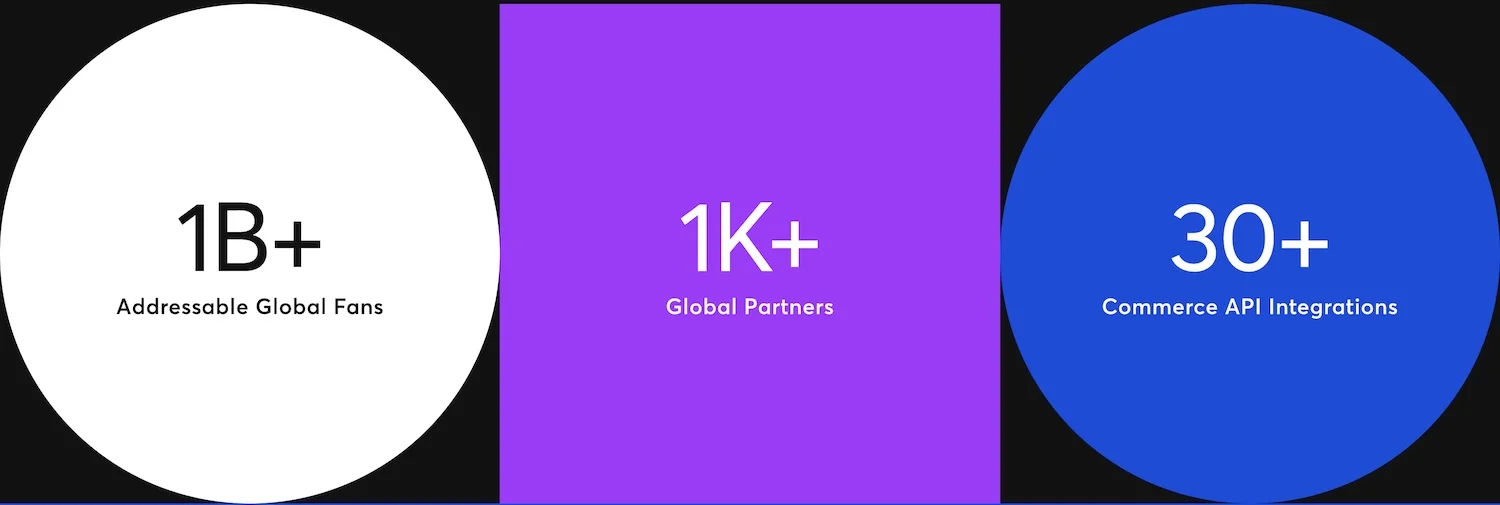
Global Clients: 9,000+
Competitive Edge: Massive reach, Exclusive venue & promoter contracts
Ticketmaster is the largest primary ticket seller in the world, operating in 20+ global markets and selling millions of tickets annually across diverse entertainment sectors. They have exclusive, long-term contracts with major arenas, sports leagues, promoters, and touring acts.
In 2024, the company distributed over 32 million tickets, demonstrating its sheer scale across concerts, sports, theatre, and other live experiences.
Ticketmaster competes with Eventbrite on the basis of venue exclusivity and large-event capabilities. While Eventbrite caters primarily to self-serve creators, small-to-mid-size organizers, workshops, and community events, Ticketmaster focuses on large-scale, high-volume, premium entertainment events. This includes arena concerts, professional sports, stadium tours, and Broadway-level theater productions.
Financially, Ticketmaster is a heavyweight. The platform generates over $3 billion in annual ticketing revenue, driven by service fees, distribution fees, venue fees, and partner agreements. [9]
In May 2025, it adopted a new pricing display called “All In Prices,” where the full ticket cost, including service fees, is shown before checkout, in response to US regulatory moves against hidden fees. [10]
Read More
- 19 Best Free Movie Download Sites | Fully Legal
- 30 Crowdfunding Websites To Turn Your Dream Project Into Reality
- Emma Burleigh, Eventbrite has sold over two billion tickets, Fortune
- Industry Report, Online event ticketing market size and trend analysis, Modor Intelligence
- Emily Kho, How SeatGeek’s deal score can save you money on every purchase, SeatGeek
- Pricing, Flexible plans for growing brands and businesses, Universe
- Chiara, The 2025 Meetup progress report, Meetup
- Fun Facts, Whova has helped over 40,000 in-person events and 10,000 virtual events, Whova
- Katie Noe, Leveraging generative AI to uplevel organizer experience, Bizzabo
- Mike Dietrich, Cvent mamed a leader in Gartner for event management platforms, Cvent
- Company Highlights, Full-year financial report of Live Nation Entertainment, PR Newswire
- Emma Roth, Ticketmaster will finally show the full price of your ticket up front, TheVerge