Italy is the heart of the global luxury industry: a reputation built over centuries of exceptional craftsmanship, design talent, and a uniquely strong manufacturing ecosystem. The country produces around 50% of the world’s luxury goods, especially in clothing and leather products.
In fact, Italy is the top exporter of fashion in the EU, and the second-largest globally. Nearly 6.9% of world fashion exports come from Italy. [1]
What sets Italian luxury brands apart is their ability to balance tradition with modern innovation. They combine rich heritage with data-driven retail, bold new designs, advanced materials, sustainable production, and fast-growing digital platforms, from luxury e-commerce to virtual runway shows.
Italy is a top destination for luxury travel, shopping, and fashion. Milan Fashion Week alone attracts over 1,750 brands and 149,000 visitors, generating an economic impact of about €240 million per event. This strengthens Italy’s position as a global trendsetter in fashion and luxury.
Below are the top Italian luxury brands that embody artistry, performance, and economic power.
Did you know?The Italian luxury goods market is expected to surpass $23.4 billion by 2030, growing at a steady 3.42% CAGR. Clothing and apparel make up about 47.8% of the market, while luxury watches are projected to grow at a 3.75% CAGR through 2030. [2]
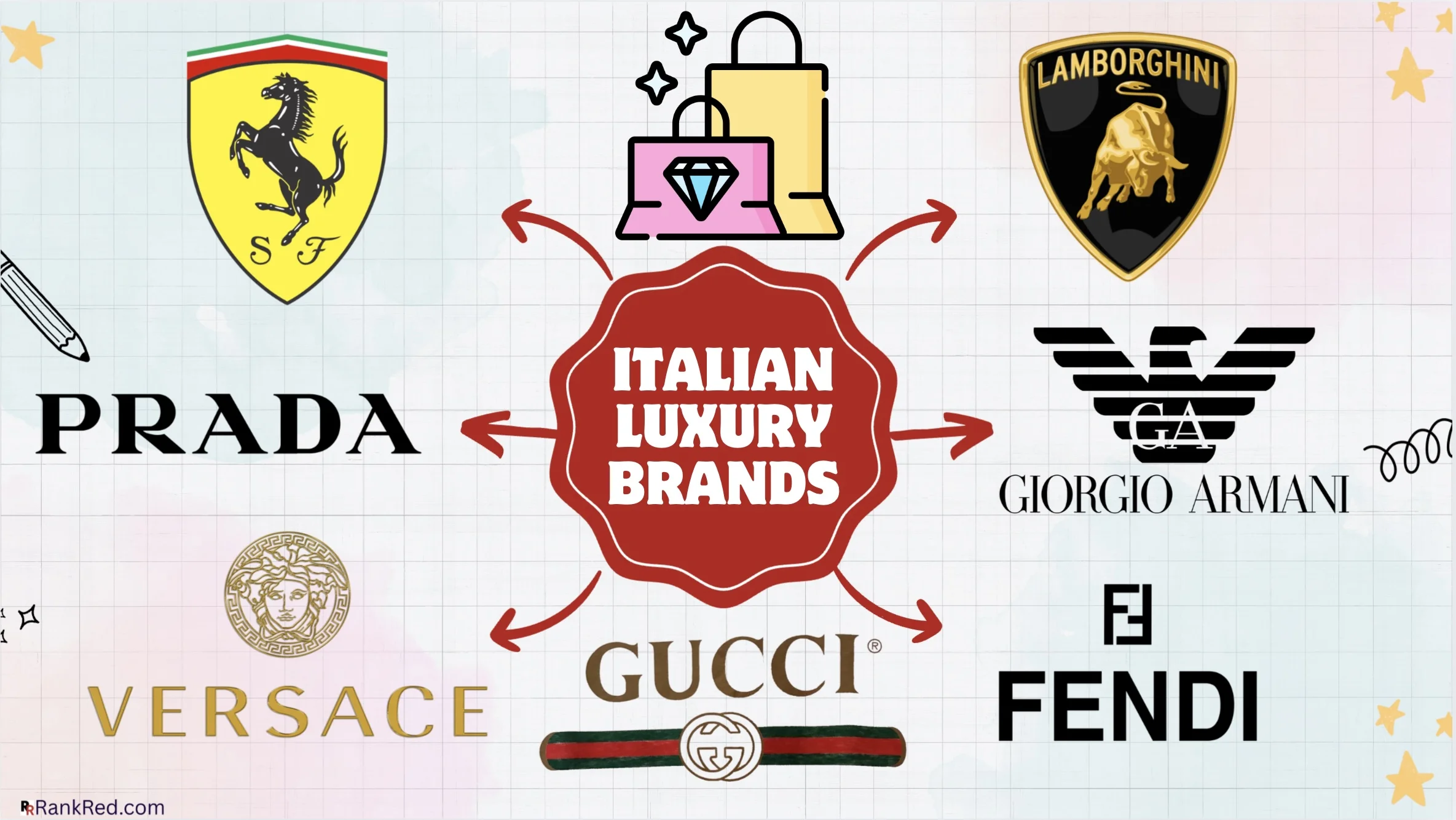
Table of Contents
17. Moncler
Founded: 1952Industry: Luxury outerwear
Parent: Independent
Price Range: €8,00 – €3,000+
Competitive Edge: Authenticity rooted in Alpine/mountain gear
Moncler makes luxury down jackets and outerwear, as well as ready-to-wear, footwear, accessories, and seasonal collections. Its identity combines mountain heritage ruggedness with high-fashion aesthetics.
The company operates a performance-luxury business model, blending technical innovation with high-fashion appeal. It competes in both technical outerwear and luxury fashion markets.
Key product features include premium goose-down filling, advanced insulation technologies, water-repellent and windproof fabrics, and lightweight yet durable materials.
In recent years, Moncler has demonstrated strong financial and commercial performance, even amid a volatile luxury-goods market. The group (including Moncler and its sibling brand) reported consolidated revenue of more than €3.1 billion in 2024, with a robust operating margin of ~30%. [3]
16. Pagani
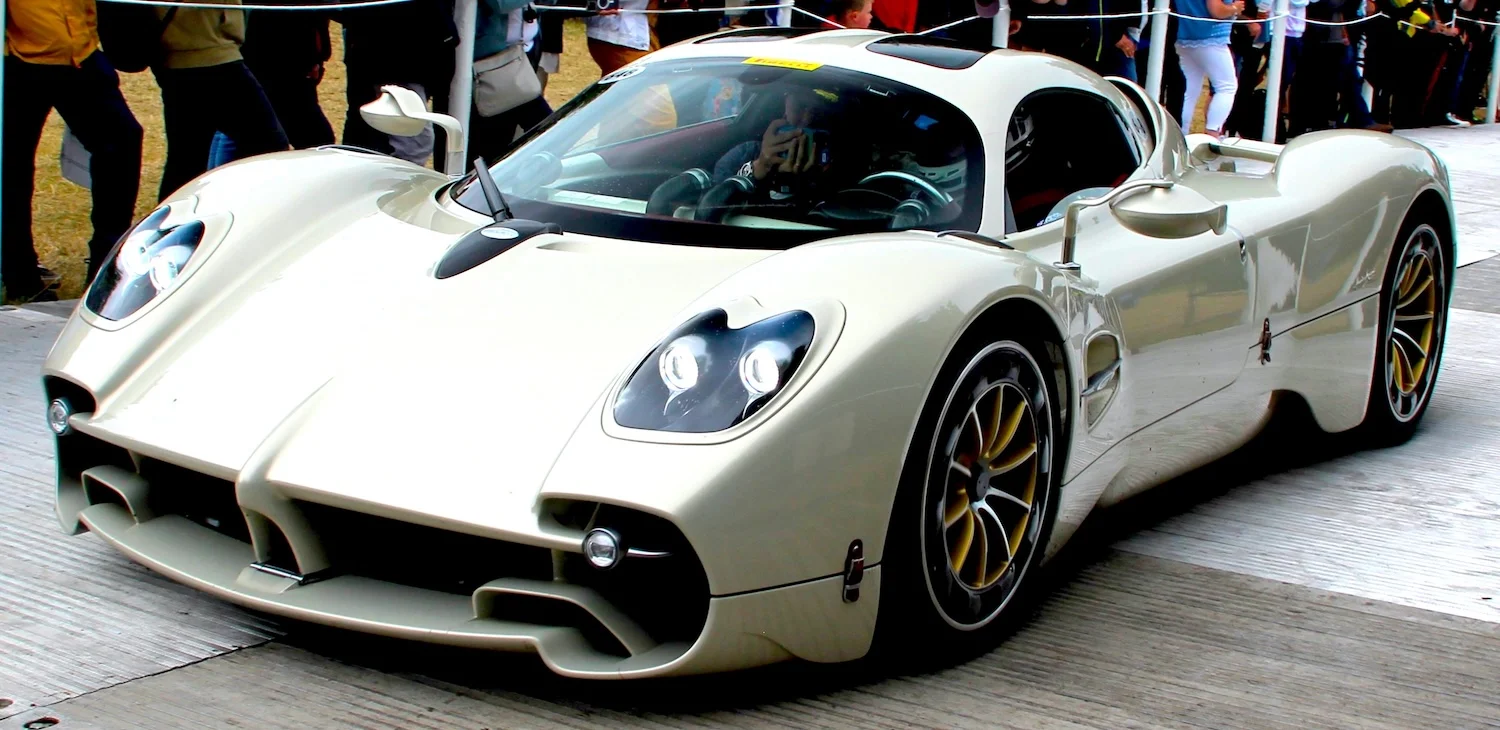 Pagani Utopia
Industry: Hypercars
Parent: Independent
Price Range: €1,500,000 – €3,000,000+
Competitive Edge: Hyper-exclusive, Carbon-Titanium technology
Pagani Automobili is one of the world’s most exclusive hypercar manufacturers, combining avant-garde design, extreme performance, and meticulous craftsmanship.
It produces some of the rarest and most meticulously handcrafted vehicles in the ultra-luxury segment. The company operates on a highly limited production model, manufacturing fewer than 45 cars per year. It employs around 250-300 people, many of whom are master artisans and engineers specializing in carbon fiber technology and bespoke automotive construction.
Pagani’s global reputation is built on the legendary Zonda, launched in 1999, followed by the Huayra in 2011 and the Utopia in 2022. These hypercars feature innovative aerodynamics, advanced carbon composites, and AMG-built V12 engines.
In a time when many automakers are pivoting toward electrification or mass-market luxury SUVs, Pagani reaffirms its focus on bespoke, performance-oriented, carbon-fiber hypercars — staying true to its founding philosophy of “art + science.” [4]
15. Pomellato
Founded: 1967Industry: Jewelry
Parent: Kering
Price Range: €1,000 – €30,000+
Competitive Edge: Colored gemstones, Signature Cabochon craftsmanship
Pomellato introduced the revolutionary idea of “prêt-à-porter jewelry,” offering fine jewelry that could be worn every day rather than reserved for special occasions.
This philosophy reshaped European jewelry culture and enabled Pomellato to build a strong, loyal customer base among women of all ages who appreciate expressive, contemporary luxury pieces.
Unlike traditional haute joaillerie houses focused on classic diamonds, Pomellato celebrates colored gemstones such as topaz, amethyst, peridot, quartz, garnet, spinel, and turquoise. This unique approach differentiates Pomellato in the global market and strongly connects with Millennial and Gen-Z luxury buyers seeking playful, fashion-forward jewelry that still carries premium quality.
Their most iconic line, Nudo, has become one of the world’s best-selling contemporary luxury jewelry collections. Other iconic collections, such as Iconica, Sabbia, and Pomellato 67, further strengthen the brand’s identity and commercial appeal. [5]
14. Brunello Cucinelli
Founded: 1978Industry: Luxury fashion
Parent: Independent (publicly traded)
Price Range: €700 – €5,000+
Competitive Edge: Mastery of cashmere and premium materials
Brunello Cucinelli is celebrated for its refined craftsmanship, ultra-premium materials, and its founder’s signature philosophy of “humanistic capitalism.”
Cucinelli’s knitwear, coats, and tailored garments are known for their comfort, craftsmanship, and understated aesthetics. The brand’s hallmark palette (earth tones, neutrals, soft greys, and warm creams) contributes to its distinctive style, which appeals strongly to affluent professionals, business leaders, celebrities, and those who prefer subtle elegance over loud logos.
Cucinelli has grown from a small cashmere workshop into a global luxury empire generating over €1.3 billion in annual revenue. [6]
With over 3,100 employees and a network of 130+ boutiques worldwide, Brunello Cucinelli stands out as one of the fastest-growing companies in high-end fashion, particularly in the “quiet luxury” segment. The company expects approximately 10% revenue growth for 2026, maintaining balanced profits and exclusivity.
13. Maserati
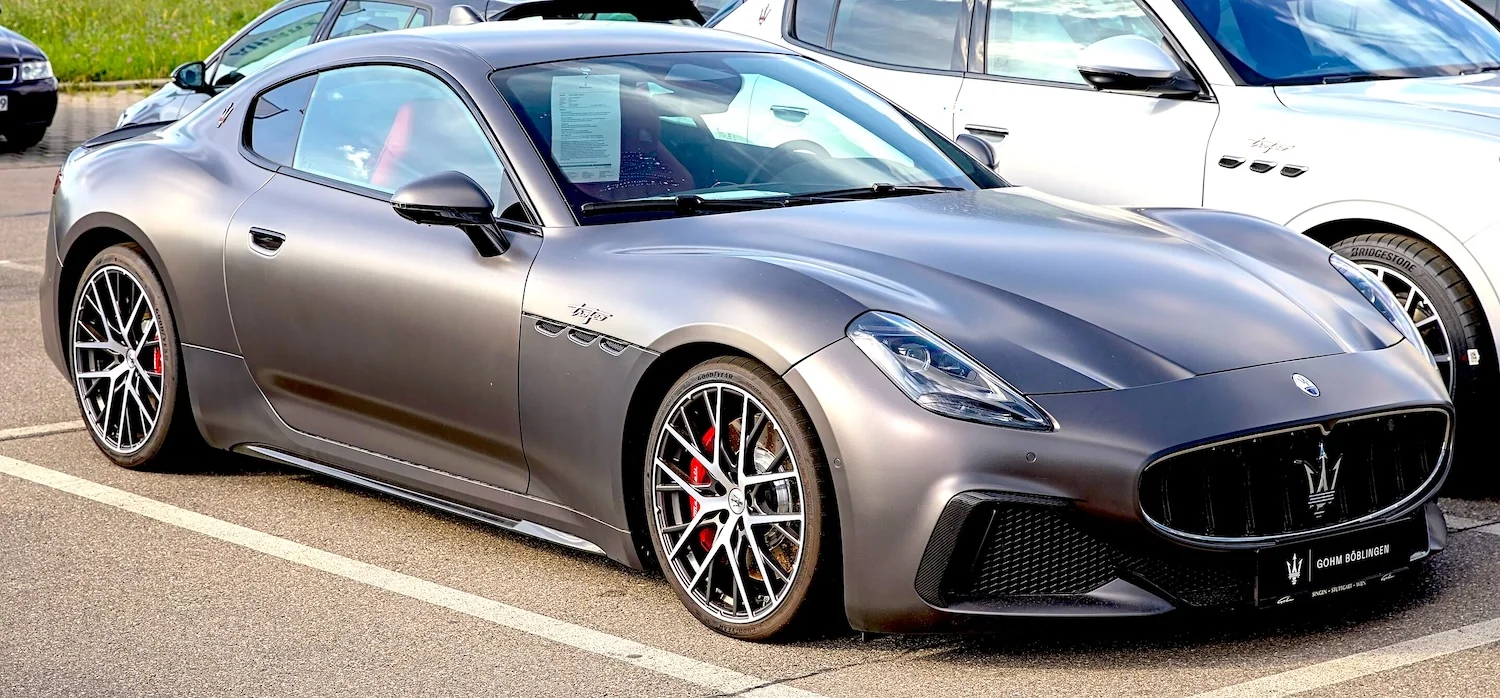 Maserati GranTurismo
Industry: Luxury automobiles
Parent: Stellantis
Price Range: €80,000 – €250,000+
Competitive Edge: Motorsport pedigree, Distinctive sound & driving emotion
Maserati has produced numerous iconic and celebrated vehicles, from classic GT cars to modern supercars. Historically, Maserati’s identity has been closely tied to motorsport. The brand has achieved significant racing success, including the 1957 F1 World Championship with the legendary Maserati 250F.
Over time, it has evolved from the racing-oriented beginnings to sensual, elegant grand tourers, sports cars, and luxury SUVs. Models such as the early Tipo 26 (their first racing car), post-war grand tourers (like the A6 line), and later luxury-performance sedans and SUVs all contributed to the brand’s mystique and reputation.
Newer models like Quattroporte, Ghibli, Levante, and the Grecale SUV help the brand cover multiple luxury vehicle segments, from executive sedans to high-performance SUVs.
In 2023, Maserati had a strong year, delivering 26,600 vehicles globally as it expanded its footprint. However, sales dropped sharply in 2024 to around 11,300 units, a decline of roughly 57%. [7]
The company now plans to grow its presence in emerging markets; in India, for example, Maserati is targeting triple-digit growth over the next 3 to 5 years.
12. Bulgari
Industry: Jewelry & watches
Parent: LVMH
Price Range: €2,000 – €100,000+
Competitive Edge: Distinctive, bold Roman-inspired design language
Bulgari is one of the oldest Italian jewellery houses: its long history gives it authenticity, gravitas, and brand credibility that newer entrants cannot easily replicate.
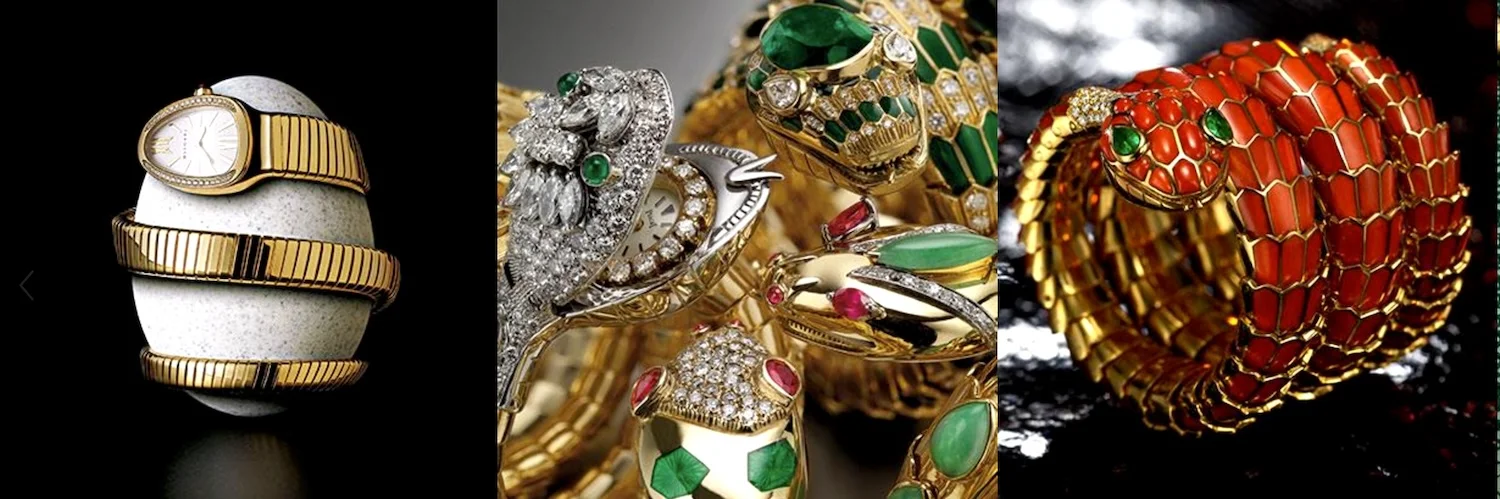
Bulgari’s high-end jewelry is often inspired by Roman architecture, ancient mosaics, columns, serpentine designs, and traditional craftsmanship.
The brand became especially famous for its daring use of color, pairing unconventional gemstone combinations (such as amethyst with turquoise or citrine with pink tourmaline) long before this became an industry trend.
Today, Bulgari’s Serpenti, B.zero1, Divas’ Dream, and Octo Finissimo collections rank among the most iconic pieces in modern luxury. Their watches have also gained strong global traction, especially after the success of the Octo Finissimo line, which broke multiple records for ultra-thin watchmaking.
Its hospitality division (Bulgari Hotels & Resorts) adds another layer to the brand, offering luxury hotels and resorts in Milan, London, Dubai, Tokyo, Bali, and more. In recent years, the company has strengthened its presence in China through celebrity endorsements, strong brand appeal, and effective use of digital channels, including e-commerce and online platforms.
11. Salvatore Ferragamo
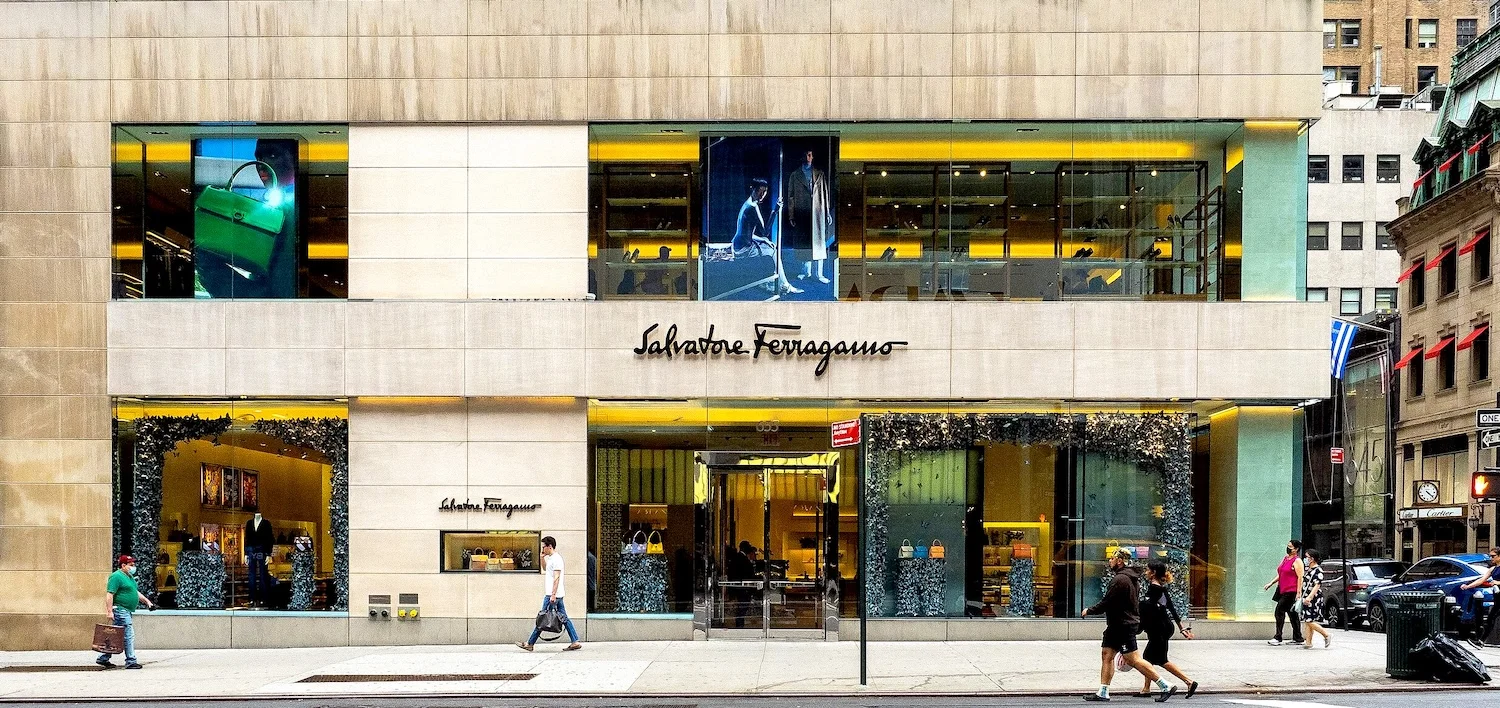
Industry: Footwear & fashion
Parent: Independent
Price Range: €450 – €5,000+
Competitive Edge: Product breadth with balanced diversification
Salvatore Ferragamo’s legacy is built on innovation. The founder created more than 350 patents, including the cork wedge, the cage heel, metal-reinforced shoes, and revolutionary arch-support techniques (many of which became industry standards).
The company started as a luxury shoemaker and gradually expanded into leather goods, ready-to-wear clothing, silk accessories such as scarves and ties, and small leather items like wallets and belts. Shoes and leather goods still form the core of the business and generate the majority of its revenue.
For items like eyewear, watches, and fragrances/parfums, Ferragamo uses licensing partnerships. This allows it to extend brand reach without managing every manufacturing or distribution detail internally.
Plus, Ferragamo is one of the few large Italian luxury companies still controlled by its founding family. This independent structure supports long-term strategy, brand consistency, and protection of Ferragamo’s artisanal heritage.
10. Dolce & Gabbana
Founded: 1985Industry: Fashion
Parent: Independent
Price Range: €600 – €8,000+
Competitive Edge: Distinct Mediterranean & Sicilian aesthetic
Dolce & Gabbana has built its reputation on sensual, opulent designs that blend classic Sicilian/Italian heritage with modern glamour. It often produces statement pieces that evoke theatrical elegance and strong romantic imagery.
Commercially, the brand’s business is driven by ready-to-wear, accessories, footwear, and fragrances. Leather goods (especially handbags) account for the largest share of total revenue, followed by the ready-to-wear line.
Dolce & Gabbana sells through its boutiques worldwide but also uses wholesale channels (especially for accessories and certain product lines), balancing exclusivity with reach. In recent years, wholesale contributed significantly to revenue growth.
In FY 2025, the company generated €1.9 billion in revenue, a 4% YoY increase. However, profitability has been challenging due to heavy investments as the house repositions and expands.
9. Giorgio Armani
Founded: 1975Industry: Fashion, home, hotels
Parent: Independent
Price Range: €800 – €5,000+
Competitive Edge: Diversified multi-brand architecture
The Armani brand remains one of Italy’s largest and most diversified luxury empires. It generates over €2.3 billion in annual revenue, employs around 8,600 people, and operates more than 620 stores worldwide.
This fully independent luxury house has transformed global fashion through its signature minimalist tailoring, soft-shouldered suits, and clean architectural silhouettes.
The brand’s clean lines, muted color palette, and understated elegance appeal to professionals, celebrities, and the global elite. In fact, Armani’s red-carpet presence has remained strong for decades, dressing actors, athletes, and musicians for major awards and film festivals.
They operate a multi-tier, vertically diversified luxury business model combining high fashion, premium lifestyle categories, fragrances, hospitality, and accessible luxury segments. The flagship Giorgio Armani line and Armani Privé couture represent the brand’s artistic and luxury apex.
Emporio Armani and Armani Exchange expand the brand’s reach into premium and accessible luxury. While Emporio Armani targets young professionals and urban consumers, Armani Exchange (A|X) provides trend-forward, entry-level luxury priced for younger global audiences.
8. Ferrari
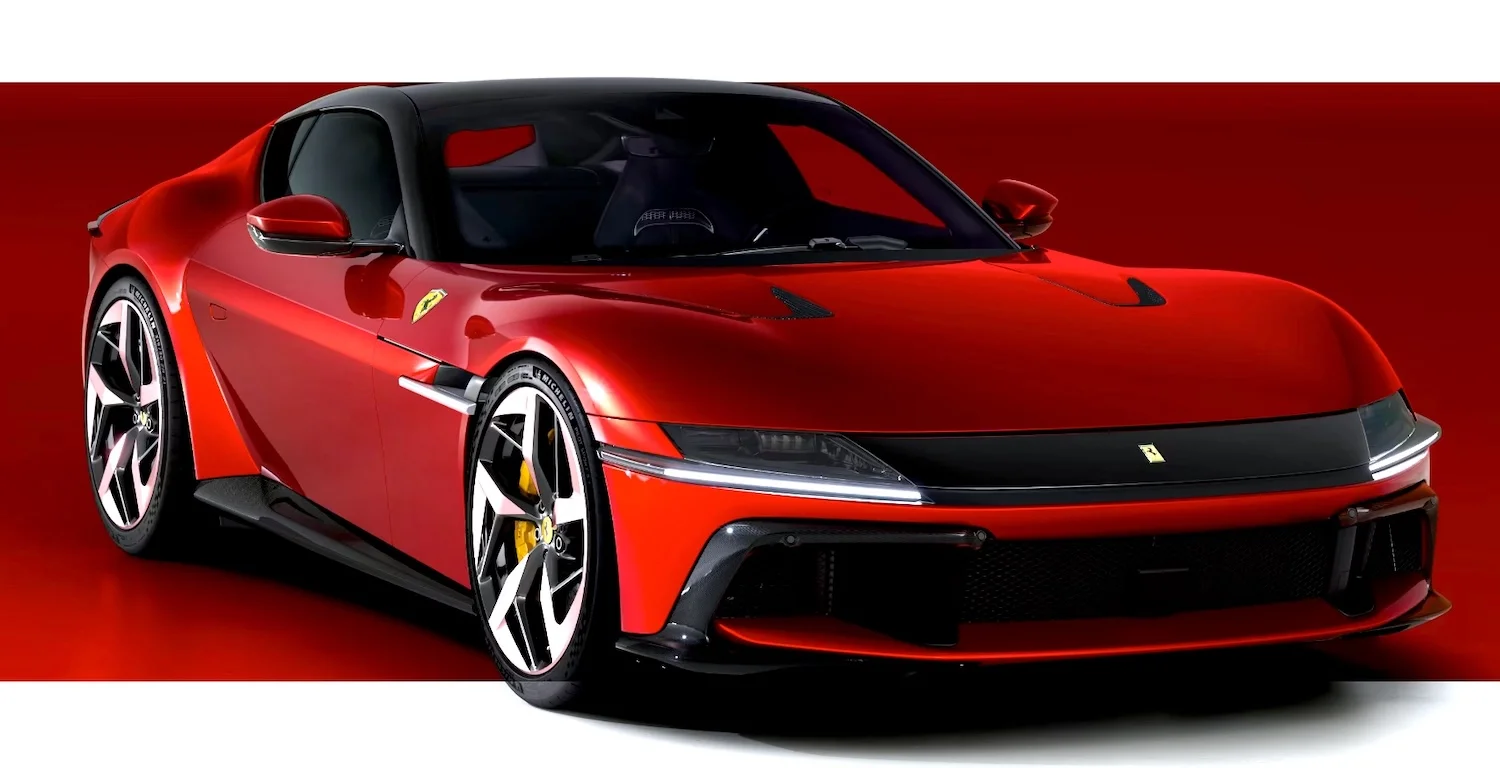 Ferrari 12Cilindri
Industry: Supercars
Parent: Public company (Exor N.V. is the largest shareholder)
Price Range: €250,000 – €1,000,000+
Competitive Edge: Formula 1 legacy, High-margin customization programs
As one of the most valuable brands on earth (often surpassing the brand value of much larger automotive companies), Ferrari represents the pinnacle of Italian engineering, exclusivity, and performance.
Ferrari’s mystique is deeply linked to its motorsport heritage. Since 1950, the brand has competed in every Formula 1 season, holding an unmatched record for championships, wins, poles, and podiums.
Their portfolio includes GT models, mid-engine sports cars, V8 and V12 powertrains, special editions, bespoke one-offs, and track-focused vehicles. Apparel, accessories, licensing, and theme parks also contribute meaningful revenue.
The company has produced nearly 330,000 vehicles since its inception, and over 90% of them are still in existence. This reflects strong customer loyalty, high resale values, and steady demand for maintenance and after-sales services, creating a reliable source of recurring revenue. [8]
Ferrari has continued to grow financially in recent years. In 2024, it delivered 13,752 cars to maintain scarcity and exclusivity. By FY 2025, Ferrari’s net revenue crossed $7.9 billion, proving that its low-volume, high-price, high-margin strategy works.
7. Lamborghini
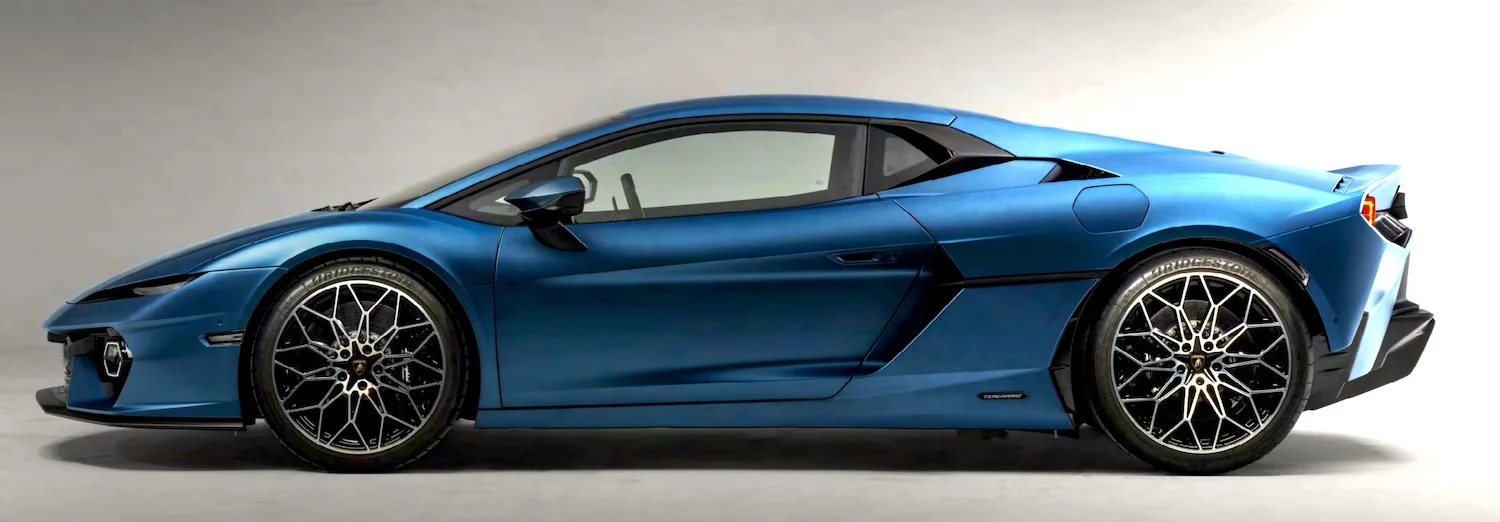 Lamborghini Temerario
Industry: Supercars
Parent: Audi (Volkswagen Group)
Price Range: €200,000 – €1,000,000+
Competitive Edge: Extreme performance and aggressive design language
With roots in the 1960s and a founder who shifted from tractors to supercars, Lamborghini’s history is colorful and unique. This heritage, along with its long history of iconic cars such as the Miura, Countach, and Diablo, gives the brand strong credibility.
Over decades, Lamborghini has built a reputation not just for extreme performance but also for bold design (wedge-shaped bodies, scissor doors, roaring V12s), making its cars not merely vehicles but status symbols.
As an Italian supercar manufacturer, the company produces all of its vehicles exclusively in Italy, maintaining strict control over craftsmanship, engine development, assembly, and customization. Each car undergoes a highly artisanal build process that combines advanced robotics with hand-finished detailing.
In recent years, Lamborghini has seen rapid growth. 2023 marked a historic milestone by delivering more than 10,000 cars for the first time: 10,112 (units, to be specific), up over 10% YoY. The momentum continued in 2024, with deliveries rising to 10,687 vehicles, a ~5.7% increase YoY and a new all-time record.
The Lamborghini Urus SUV is currently the company’s best-selling model. Historically, the Gallardo held that title, with more than 14,000 units produced between 2003 and 2013 before being succeeded by the Huracán. [9]
6. Versace
Industry: Luxury fashion
Parent: Prada
Price Range: €500 – €6,000+
Competitive Edge: Instantly recognizable aesthetic & brand DNA
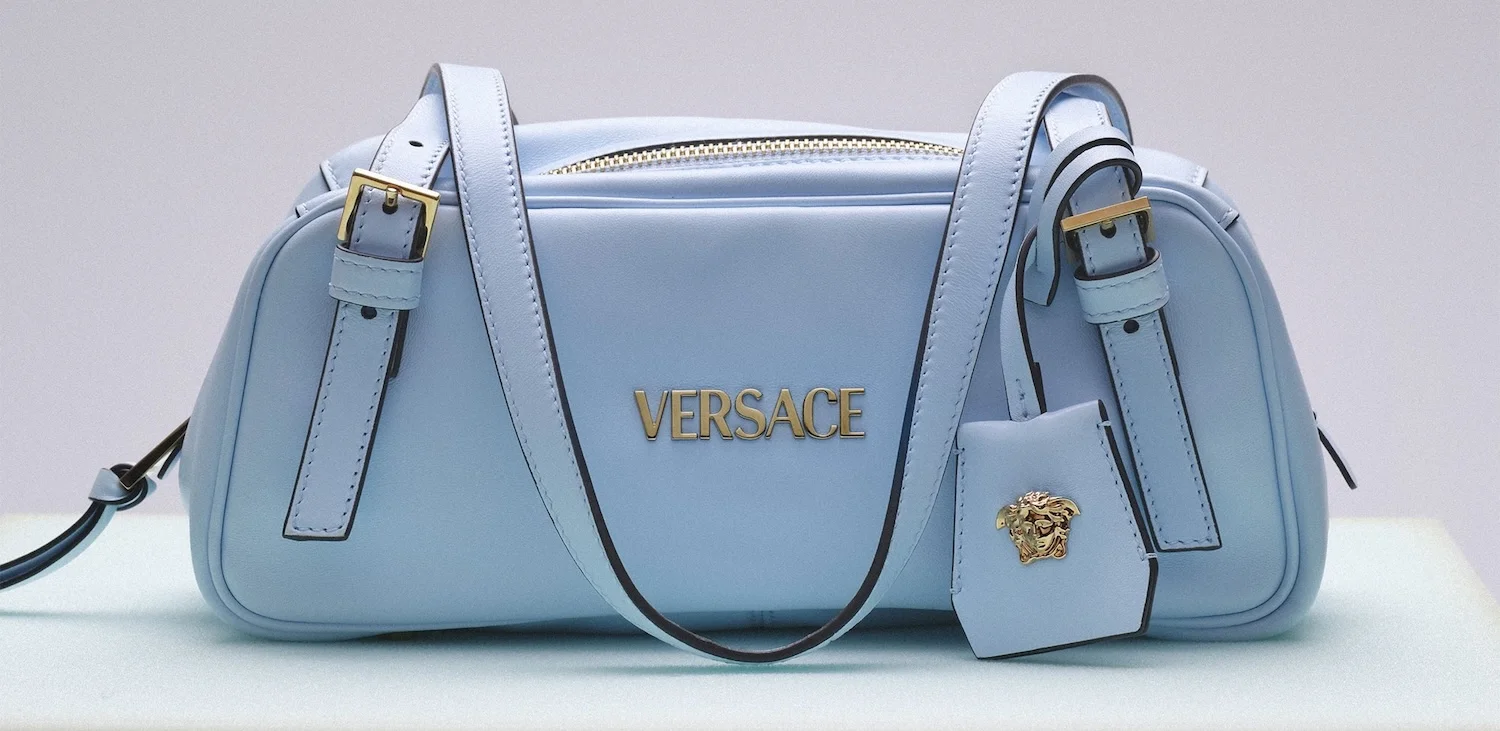
Versace is popular for its bold aesthetic, high-glamour designs, and unmistakable Medusa emblem. Its unique blend of luxury, theatricality, and celebrity power makes it one of the most recognizable names in fashion.
Versace’s signature visual identity (including the iconic Medusa-head logo) expresses what the brand stands for: power, allure, and over-the-top luxury.
The brand offers high-fashion clothing, accessories, fragrances, cosmetics, jewelry, home décor, and furnishings under lines such as couture collections, Versace Jeans Couture, Versace Home, and more. Products like the La Medusa Bags, Barocco-print dresses, and Medusa Jewelry consistently rank among the top-selling luxury fashion items.
Thanks to its bold designs and high-profile clients, Versace is a regular presence on red carpets, at fashion shows, and across high-glamour social scenes.
Financially, Versace generates more than $1 billion in annual sales, with the EMEA region contributing the largest share. It runs 131+ stores globally and holds 145 patents. [10]
5. Valentino
Founded: 1960Industry: Couture & fashion
Parent: Independent; Mayhoola for Investments (70%)
Price Range: €900 – €20,000+
Competitive Edge: Haute-couture roots, Red-carpet dominance
Valentino’s unique combination of haute couture prestige and modern ready-to-wear relevance places it among the most coveted luxury brands in the world.
Although couture accounts for a smaller share of total revenue, it serves as the creative heart of the house and plays a major role in maintaining the house’s luxury exclusivity.
In fact, Valentino is one of the few remaining fashion houses that still produces full haute couture collections each season, crafted by expert artisans in the Roman atelier and priced from €20,000 to €200,000+.
However, it is Valentino’s ready-to-wear and accessories business that drives the majority of its revenue. Leather goods, shoes, and handbags (including the iconic Rockstud collection) account for more than 60% of total sales.
One of Valentino’s most iconic signatures is the vibrant “Valentino Red,” a shade that reflects the brand’s bold yet elegant and timeless style. Over the decades, Valentino has dressed royalty, film stars, and high-society figures, firmly establishing itself as a global symbol of luxury and glamour.
4. Bottega Veneta
Founded: 1966Industry: Leather goods
Parent: Kering Group
Price Range: €2,000 – €8,000+
Competitive Edge: Subtle elegance, Signature technique (Intrecciato)
Bottega Veneta has built a brand identity that appeals to discerning consumers who value subtlety, longevity, and true “luxury by quality.”
Unlike many luxury brands dominated by monograms or logos, Bottega Veneta built its reputation on the philosophy of “When your own initials are enough,” emphasizing discreet luxury and the intrinsic value of materials and craftsmanship.
Their intrecciato leather weave makes the leather more flexible, durable, and unique. It has become a hallmark of the brand, offering a luxury identity that doesn’t depend on logos.
The brand’s leather goods (especially handbags) account for 79% of its total sales. Products like the Cassette, Jodie, Knot, Arco, and Pouch have become global icons and appear frequently in luxury resale rankings. [11]
In 2024, Bottega Veneta achieved €1.7 billion in annual revenue. The brand now operates more than 300 boutiques worldwide, with a strong presence in Europe and North America.
3. Fendi
Industry: Luxury fashion & leather goods
Parent: LVMH
Price Range: €1,500 – €10,000+
Competitive Edge: Roman heritage, Material and fur expertise
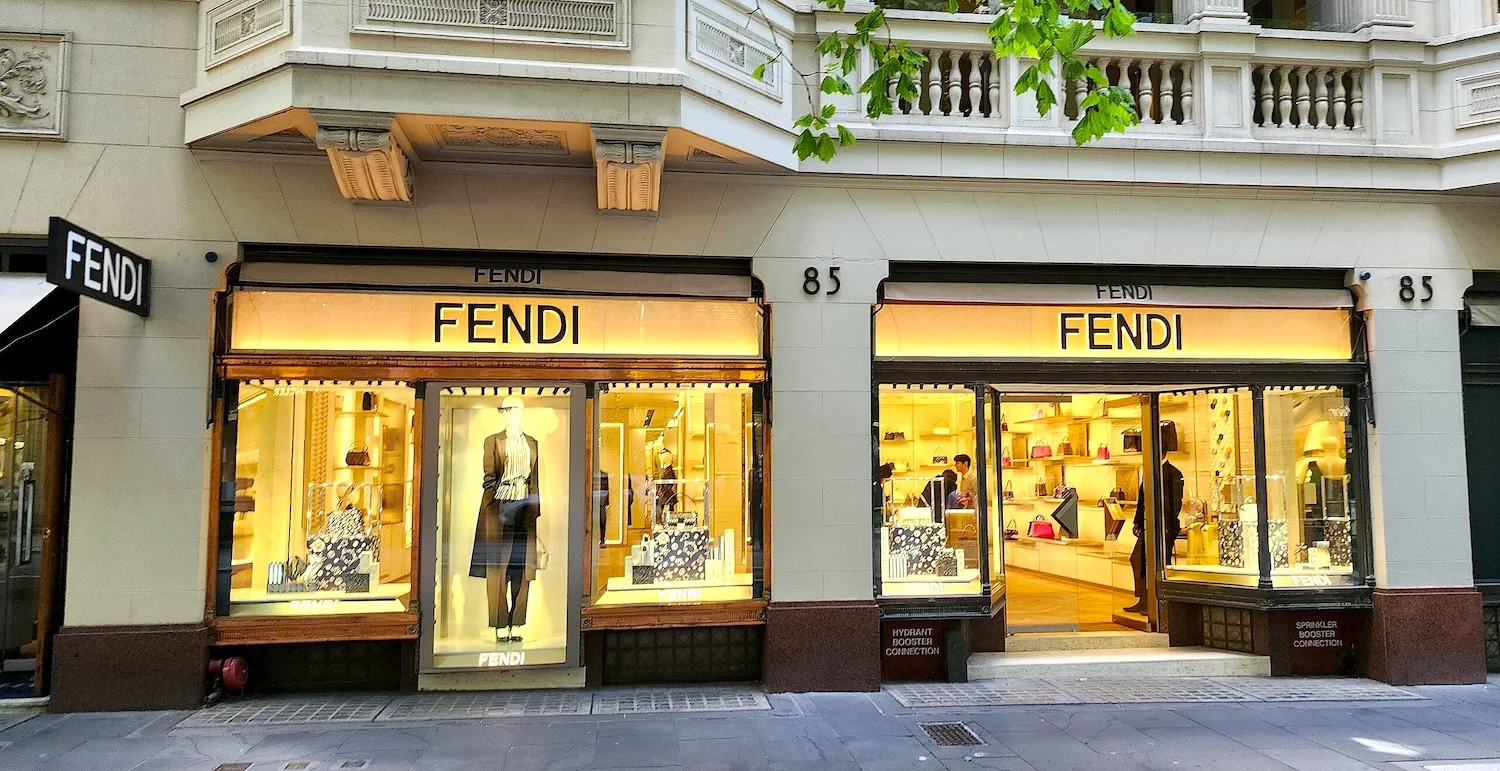
Fendi is one of Italy’s most prestigious luxury fashion houses, popular for its mastery of leather craftsmanship, fur innovation, and Roman elegance.
The brand does not limit itself to fur/leather goods. Over the decades, it expanded into ready-to-wear (women’s and men’s clothing), accessories (bags, shoes), timepieces, fragrances, eyewear, and even home fashion and furnishings through extensions or related ventures.
Fendi now operates more than 250 stores worldwide, enabling it to control its brand experience, deliver high-end service, and maintain its prestige.
Since 2001, Fendi has been a part of the luxury conglomerate LVHM. This gives Fendi access to global-scale resources, distribution networks, capital, and strategic support, while enabling the maison to remain rooted in its Italian heritage.
2. Prada

Industry: Luxury fashion & leather goods
Parent: Prada S.p.A.
Price Range: €800 – €5,000+
Competitive Edge: Material Innovation (Nylon → Re-Nylon)
Known for its distinct aesthetic (minimalist, architectural, and intellectually sophisticated), Prada is one of the very few luxury houses that shape global fashion direction rather than follow it.
The Group manages multiple brands, including Prada, Miu Miu, Church’s, and Car Shoe, and employs more than 14,800 people worldwide.
Prada has consistently maintained a deep connection with its heritage while simultaneously pushing boundaries in design, materials, and sustainability. For example, it introduced the nylon backpack in the 1980s, famously revolutionizing luxury fashion by elevating industrial materials into high-end status symbols.
Decades later, nylon remains central to Prada’s brand identity, with the “Re-Nylon” sustainable line becoming one of the fastest-growing product categories. This mix of heritage leather craftsmanship and material innovation differentiates Prada from more logo-driven brands.
The Group operates more than 600 boutiques globally, owns 26 manufacturing facilities, and retains substantial in-house production capacity, especially for leather goods, ready-to-wear, and footwear.
In 2025, Prada acquired another major Italian luxury house, Versace, for around $1.4 billion, consolidating two iconic yet stylistically contrasting houses under the same umbrella. [12]
1. Gucci

Industry: Luxury fashion & leather goods
Parent: Kering Group
Price Range: €500 – €6,000+
Competitive Edge: Iconic, recognizable products and branding
Gucci is one of the world’s most commercially powerful luxury brands. It is recognized globally as a symbol of Italian craftsmanship, modern fashion culture, and high-end desirability.
Started as a small leather goods workshop, Gucci has grown into a global luxury empire, generating over €7.6 billion in annual revenue and consistently ranking among the top three luxury brands worldwide by sales (alongside Louis Vuitton and Chanel). [13]
It sells across multiple segments — including leather goods, shoes, ready-to-wear, accessories, fragrances (via licensing), and home decor — which reduces dependency on a single line.
At its peak in 2022, Gucci earned €10.5 billion in revenue. Today, it runs more than 529 stores globally and employs over 20,000 people. [14]
Read More
Sources Cited and Additional References- Key Sectors, 6.9% of world fashion exports come from Italy, OpportunItaly
- Industry Report, Italy luxury goods market size & share analysis, Mordor Intelligence
- Madeleine Schulz, Moncler full-year revenues grow 7% on strong DTC sales, Vogue Business
- Linda Lew, Hypercar maker Pagani says China has lessons for Europe on EVs, Bloomberg
- Jewelry, Pomellato showcases beauty in its most essential form, Elle
- Maliha Shoaib, Brunello Cucinelli sales grow 12% in 2024, Vogue Business
- Adrian Padeanu, Maserati sales collapsed in 2024, Motor1
- Strategic Plan, Ferrari capital markets day 2030, Ferrari
- Taimoor Nafees, Lamborghini had its most profitable year ever, F1rst Motors
- Patents Highlights, Versace holds 145 patents worldwide, GreyB
- Fashion & Accessories, Global revenue share of Bottega Veneta by product category, Statista
- News, Prada completes Versace takeover after long courtship, CNN
- Fashion & Accessories, Global revenue of Gucci throughout the years, Statista
- Fashion & Accessories, Number of directly operated Gucci stores worldwide, Statista