
The term “forensic” is derived from the Latin word “forēnsis,” which means of or before the forum. The history of this word dates back to Roman times, when the person accused of a crime was presented before a group in the forum.
In modern times, forensic science refers to the various scientific techniques used to solve crimes. This involves collecting, analyzing, and presenting evidence in order to solve a crime or successfully convict the offender.
Forensic science is mostly used to
- Prove elements of a crime scene
- Detect decedents or suspects
- Establish a connection to a crime
- Verify or disprove suspects’ or victims’ statements
The increased use of advanced scientific techniques to gather and analyze evidence has led to the closure of many civil and criminal cases that couldn’t be solved via classical methods. In fact, new techniques are being applied to several-year-old cases that remain unsolved.
Many different types of forensic science exist. Each specializes in a unique field to aid in solving legal disputes or crimes. Here’s the bird’s-eye view of the different branches of forensic science.
Table of Contents
12. Computational Forensics
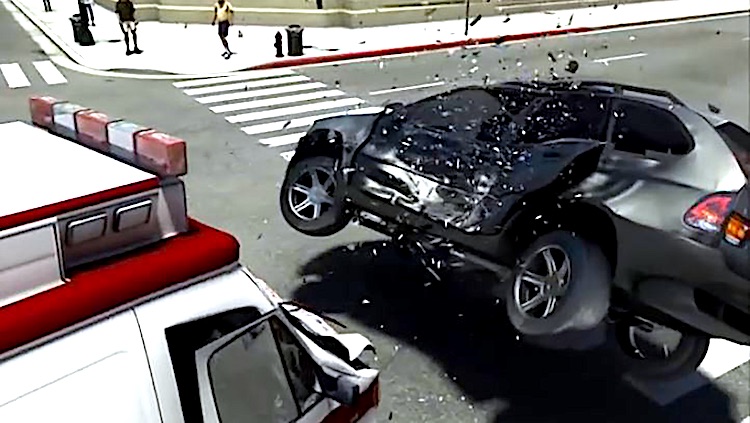 Computer Animation of a car accident
Use of computer-based simulation and modeling to study digital evidence
The modern crime investigation leverages the hybrid intelligence of humans and machines. More specifically, computer software and tools allow forensic practitioners to:
- Search large amounts of data efficiently
- Reveal trace evidence for further investigation
- Examine evidence in an objective and reproducible way
- Evaluate the quality of the examination technique
- Visualize and document the result of the investigation
- Reveal hidden or previously unknown patterns
During the whole process, a broad range of substances, objects, and processes are examined. They are based on pattern evidence, such as shoeprints and toolmarks, as well as physiological and behavioral patterns.
The application of Computer animation (for example, audiovisual reconstruction of incidents to aid investigators) in courtrooms is becoming increasingly popular.
11. Forensic Astronomy

Science of solving puzzles using the sky
Astronomy is used (though rarely) in forensic science to determine the appearance of the sky at specific times in the past. The Moon’s or the Sun’s location in the sky at specific times may be legally relevant, such as determining the date an image was clicked. It is mostly used to resolve issues in art history and other historical problems.
One of the leading experts in the field, Dr. Don Olson, an astrophysicist at Texas State University, has developed special computer programs that map ancient star charts with historical records, photos, weather charts, and tidal patterns. Using these computer tools, he has solved several fine arts puzzles from the past.
10. Forensic Geology
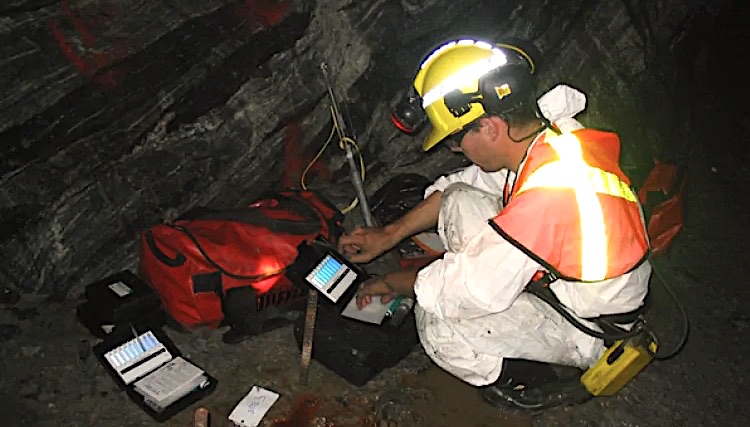 A research team studying rock 3 kilometers underground
Study of evidence, including minerals and substances, found on Earth
Geology is the science of Earth: it deals with the dynamics and physical history of the Earth, as well as the chemical and biological changes it has undergone or is undergoing. Forensic geology addresses the legal aspects and ramifications of analyzing Earth’s processes and materials.
The use of geological evidence in crime investigation originated with the fictional detective, Sherlock Holmes, in the late 1980s. However, the first real-world use of forensic geology didn’t occur until 1904, when German chemist Georg Popp identified a murder suspect from a handkerchief that contained traces of coal dust and the mineral hornblende.
Today, forensic geologists combine science, technology, efficient methods, and personal experience to solve issues involving soil, surface water, groundwater, and anything beneath the Earth’s surface. They use various instruments and techniques, including scanning electron microscopy, X-ray diffraction, and microchemical analysis.
9. Forensic Seismology
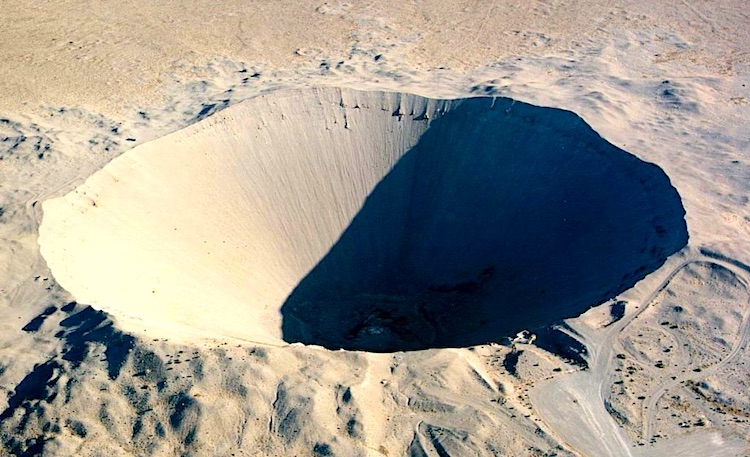 Crater made in the wake of the nuclear blast
Identification and analysis of distant phenomena using seismology
In this field, various methods of seismology are used to detect and examine underground explosions, especially nuclear explosions. It plays a crucial role in enforcing bans on nuclear weapons.
Forensic seismology can also detect other underground events, such as submarine explosions, iceberg movement or collisions, or massive ocean waves.
In order to accurately identify and spot detonations, a network of about 170 seismic stations is used. These stations capture underground pressure (P) waves and send this signal for processing over a secure communication channel. Special software programs then isolate patterns, eliminate noise, and calculate the explosive yield and depth of burial.
8. Digital Forensics
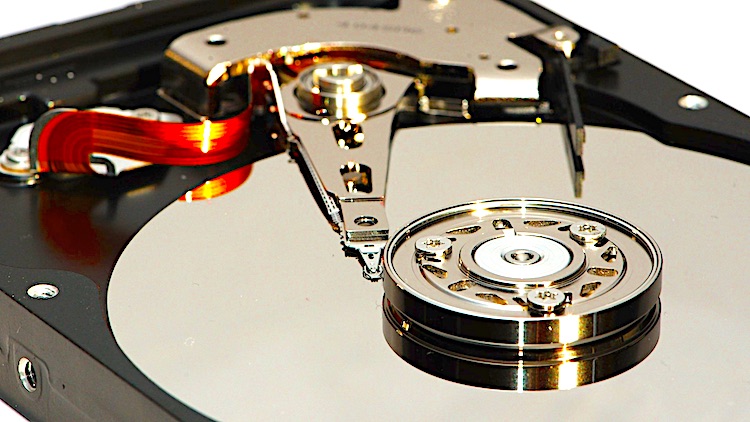 A hard disk drive head and platter
Recovery and analysis of material found in digital devices
Digital forensics is the science of finding evidence from digital devices. The technical aspect of an investigation can be split into several sub-fields based on the type of digital equipment involved: computer forensics, mobile device forensics, network forensics, and forensic data analysis
There are five key processes in digital forensics:
- Identification: Find the evidence, noting where it is stored.
- Preservation: Isolate, secure, and preserve data so no one can tamper with the evidence.
- Analysis: Reconstruct chunks of data and draw conclusions based on the extracted information.
- Documentation: Create records of all data so it can be used to recreate the crime incident.
- Presentation: Summarize data in a way that it can be easily understood and presented/accepted in a court of law.
However, there is one major limitation in a digital forensic investigation: the use of encryption. It disrupts the initial analysis where pertinent evidence might be located. Laws requiring people and companies to disclose encryption keys are still relatively new and controversial.
7. Forensic Art
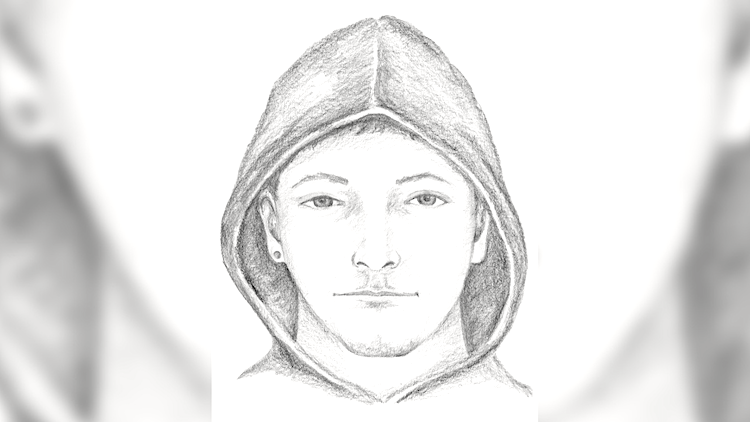
Presentation of visual information in relation to legal procedures
Despite several advances in high-tech investigative tools, a simple pencil sketch can have a substantial impact on civil or criminal cases. These sketches are used to identify, apprehend, and convict a wanted person.
Typically, forensic artists create such images using crime scene evidence, skeletal remains, or eyewitness accounts. They work closely with law enforcement officers to identify victims and criminal suspects through facial composite sketches.
The three key disciplines in the forensic art field are:
1. Composite Art: involves sketching an unknown subject using a number of individually described parts. A final image is intended to be a likeness or similarity of a witness’s perception of the subject.
2. Image Modification: is the process of altering or enhancing photographs in order to help an investigator. Examples of this include age progression/regression or clarifying the CCTV footage to recognize a person.
3. Post-Mortem and Facial Reconstruction: involves rebuilding the facial features of either partially or fully decomposed human remains. Artists can draw or use digital software to produce 3D clay figures.
6. Forensic Entomology
 Flesh fly on a decomposing flesh
Study of arthropod biology, such as insects and centipedes, to criminal matters
Although forensic entomology is mainly associated with death investigations, it can also be used to detect poisons and drugs, determine the time of the infliction of wounds, and find the location of an incident.
From the early stages of decomposition, insects are drawn to a dead body and often lay eggs on it. Forensic scientists study the types of insects present and their growth stages to estimate the time since death, detect whether the body was moved, and help determine the cause of death.
The forensic entomology field can be further split into three categories:
- Urban: It usually focuses on pest infestations that are related to litigation, such as legal disputes between landlords and exterminators.
- Stored-product: It involves cases of insect infestation or contamination of commercially distributed foods with the purpose of finding evidence relevant for litigation.
- Medico-legal: It involves gathering evidence through the examination of insects and other arthropods at a crime scene.
The most frequently studied insects include flies, beetles, scorpionflies, mites, ants, and bees, which are often found in (or near) the body. Investigators also analyze other factors such as location, weather, and geography of the crime scene to determine the time of death.
5. Bloodstain Pattern Analysis

Examination of the shapes and distribution of patterns of bloodstains
The use of bloodstains as evidence is not something new. Since the 1960s, trained bloodstain pattern analysts have used physics (fluid dynamics), biology, and mathematical calculations to accurately reconstruct events at crime scenes.
Analysts categorize stains by analyzing splash patterns, transfers, voids, and other marks. Usually, they look for
- Distance from the blood source to the target
- Nature of the force that caused the bloodshed
- Direction of travel and impact angles
- Object(s) that caused the bloodshed
- Sequencing of two or more bloodshed events
Sometimes, specifically developed software such as HemoSpat is used to calculate the area of origin of impact patterns. The software can also measure the impacts on non-orthogonal surfaces and show results from various angles.
4. Forensic Chemistry
Identification of unknown substances found at a crime scene
Forensic chemistry involves the analysis of non-biological trace evidence obtained from crime scenes. The chemist matches samples to known substances, determines their chemical composition, and identifies their origin.
Forensic chemists spend most of their time in the lab, analyzing the evidence. They use a wide range of techniques and instruments to identify unknown substances. The two most common methods are:
- Spectroscopy: The Science of measuring spectra produced when materials interact with or emit electromagnetic radiation.
- Chromatography: An analytical method for separating a mixture of chemical substances into its individual components so that those components can be thoroughly examined.
Specialists mostly use gas chromatography-mass spectrometry, thin-layer chromatography, Fourier transform infrared spectroscopy, atomic absorption spectroscopy, and high-performance liquid chromatography.
Throughout the process, they follow predefined rules set by specific agencies and governing bodies. These rules ensure the quality assurance and quality control of methodologies and instruments used in the process.
Read: What Exactly Is Chromatography? Types and Applications
3. Election Forensics
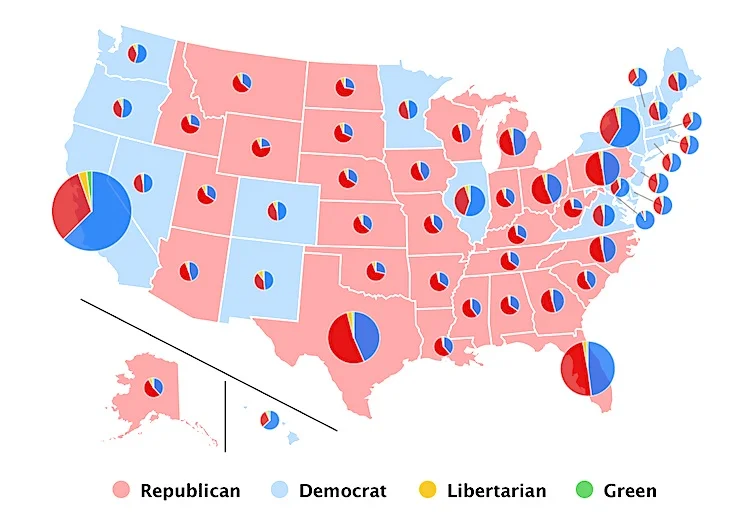
Determine if the election results are statistically normal
The consequences of electoral fraud are grave for democratic stability and quality. That’s why effective techniques are needed to identify and investigate election fraud.
Election forensics utilizes various quantitative methodologies to verify that observed election results do not deviate from expected patterns. These methodologies can be simple (such as using Benford’s law to assess the deviation or conformance of vote counts) or more complicated, involving machine learning methods.
The latter provides algorithms and tools that look for abstract patterns in data. For example, by using both synthetic vote-count data and empirical data from controlled scenarios (where fraud has been observed), one can train the algorithm to ‘learn’ certain regularities in the data and associate them with fraudulent manipulation.
2. Forensic Engineering
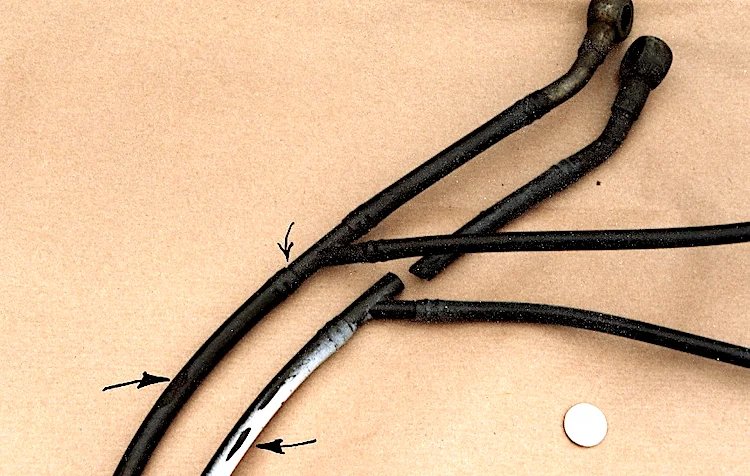 Broken fuel pipe from a road traffic accident
Analysis of failures, ranging from serviceability to catastrophic
Forensic engineering includes the investigation of structures, materials, or components that fail or do not function properly, causing damage to property or personal injury. This field also deals with retracing faulty mechanisms that lead to mishaps.
Forensic engineering mainly aims to understand what happened in an accident by identifying the exact point of failure.
To achieve this, engineers mostly used two methods:
- Fault Tree Analysis: A top-down approach of examining an undesired state of a system. It can be used to perform a wide range of system-level risk assessments.
- Failure Mode and Effects Analysis: A systematic, proactive technique for identifying the location and causes of failures. It also involves evaluating the relative impact of different failures.
Airplane crashes, rail accidents, building collapses, and heavy machinery failures are usually investigated by forensic engineers. Furthermore, many products have forensic components that monitor signs of early faults to improve efficiencies and quality.
1. Forensic DNA Analysis

Comparing criminal suspects’ profiles to DNA evidence
DNA evidence alone isn’t enough to secure a conviction, but it has become the gold standard in forensic science. It has become progressively more accurate and faster over the last three decades.
DNA analysts retrieve data from skin cells left behind on a crime scene and conduct tests in a laboratory with dedicated facilities and devices that meet the FBI’s Quality Assurance Standards for Forensic DNA.
The majority of the DNA samples submitted to a lab undergo a predefined process that involves extraction, quantification, amplification, separation, analysis, and interpretation of DNA profiles.
Modern data analysis techniques have made it easier to detect and distinguish individuals from a mixed DNA sample. Scientists are currently exploring new DNA methods and user-friendly equipment that could enable samples to be run and examined in less than 2 hours.
Read More

It’s great that you mentioned how many different types of forensic science exist. I was watching a TV show while eating last night and it mainly talked about the topic of forensics. According to the show, it seems there are also forensic agrologists now, which sounds pretty interesting.
I WANT TO BECOME A CRIINOLOGIST . IS IT A GOOD CHOICE OR BAD I AM CONFUSED