The global freelance and independent talent market is now worth over $1.5 trillion, and digital platforms are taking up a fast-growing share of it. In the US alone, more than 72 million people do freelance work. In 2025, a record 5.6 million independent workers in the US earned over $100,000 a year, showing how quickly high-earning freelancing is rising.
Globally, an estimated 1.57 billion people work as freelancers or independent workers, and Gen Z is the fastest-growing group among them.
Upwork, the world’s largest online talent marketplace, sits at the center of this transformation. With over 18 million skilled freelancers, 5 million registered clients, and a Gross Services Volume (GSV) exceeding $4.5 billion, Upwork has set the benchmark for digital talent acquisition. [1]
Upwork’s enterprise segment (which serves Fortune 500 companies) continues to grow steadily each year, showing the platform’s increasing relevance in large-scale talent operations.
Yet, its dominance is continually challenged by a new generation of specialized, premium platforms tailored for very specific talent needs. Competition is no longer just about connecting clients with freelancers; it’s about speed, specialization, automation, AI-driven matching, and enterprise-grade workforce management.
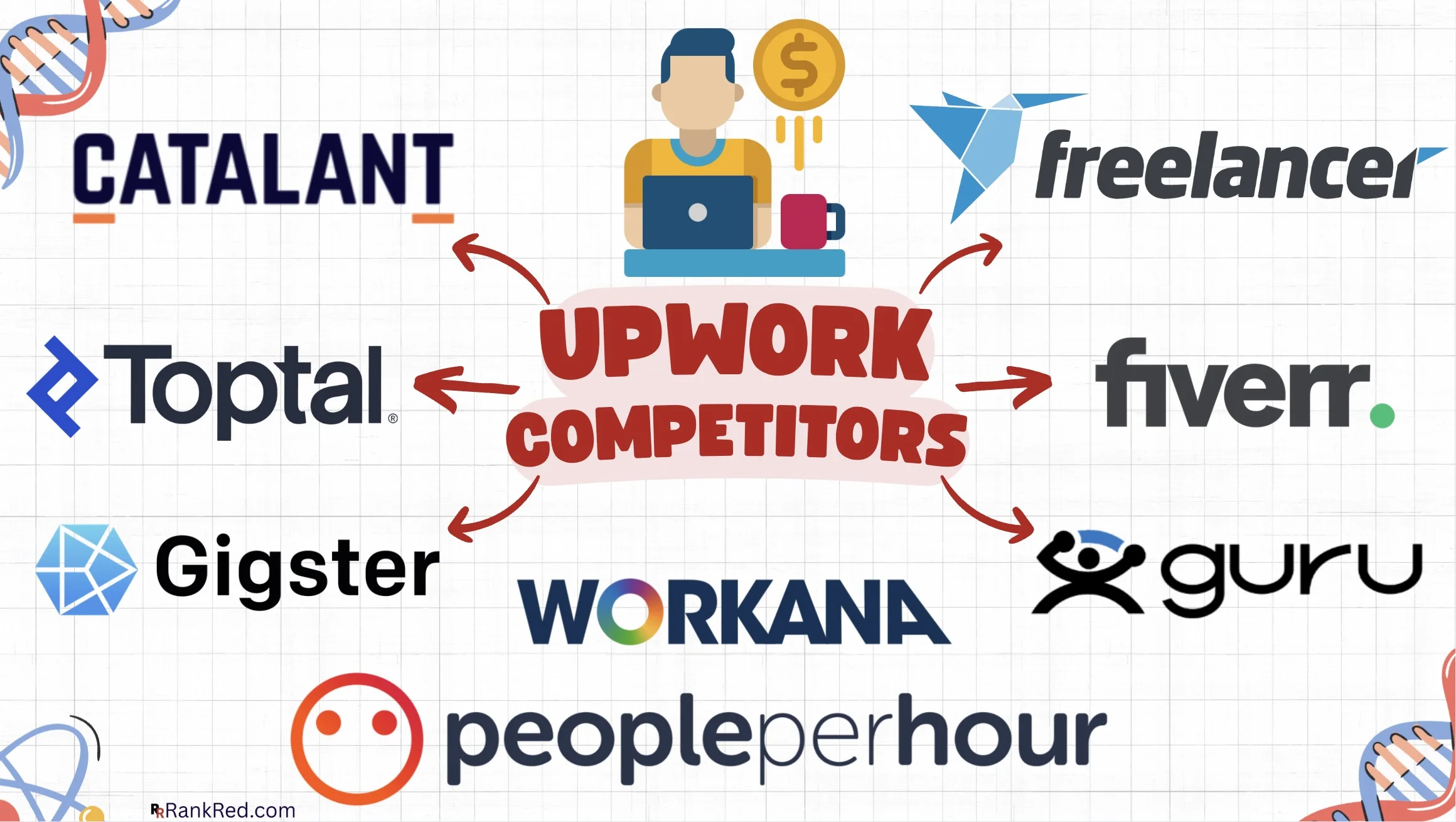
Below, I feature the top Upwork competitors across multiple segments, including premium talent marketplaces, gig-oriented microservice platforms, remote-staffing companies, and curated engineering networks.
The global freelance platforms market size is projected to reach $14.39 billion by 2030, growing at a CAGR of 17.7%. This rapid growth is largely driven by the expanding gig economy. [2]
Table of Contents
13. FlexJobs
Founded: 2007Jobs: 190,000+ online jobs
Competitive Edge: Rigorous vetting & scam-free listings
FlexJobs was created to provide a more reliable, curated alternative for job-seekers: a platform that filters out scammy, low-quality, or misleading job postings, delivering only legitimate, verified remote/flexible-work opportunities. Their team spends over 200 hours a day screening jobs to ensure they are legitimate.
Unlike freelance marketplaces where workers bid for projects, FlexJobs operates primarily as a premium job-board subscription platform, offering vetted listings from companies of all sizes . It features more than 190,700 online jobs from 12,670 companies.
Each job listing is hand-screened by their team: they verify that the employer offers a genuine flexible/remote arrangement (remote, hybrid, part-time, freelance, flexible schedule), and that the opportunity is professional in nature (not shady) before allowing it to appear.
12. 99designs

Users/Talent:150,000+ freelance designers
Competitive Edge: High-quality design work
99designs is focused exclusively on graphic/creative design. It’s a go-to platform for logos, websites, illustrations, brand identities, and marketing collateral.
It is especially popular among early-stage businesses launching brands that need logo design packages. Creative categories span more than 90+ design specialties, from minimalist logos to book covers, t-shirt illustrations, UX/UI designs, social media branding, and niche creative assets.
The platform grew rapidly due to its distinctive approach: instead of hiring one designer upfront, clients launch a design contest, where multiple designers submit creative concepts. The client then selects their favorite design, and the winning designer receives the prize. [3]
While open platforms like Upwork rely on one-to-one freelance engagement, 99designs offers one-to-many creative competition, leading to a richer set of options for clients.
11. Workana
Founded: 2012Users/Talent: 3 million+ freelancers
Competitive Edge: Frequent project volume, Strong language & cultural alignment
Workana is one of the largest freelance marketplaces in Latin America that brings together businesses (clients) and freelance professionals across many disciplines: software development, design & multimedia, writing/translation, marketing, admin support, and more.
It competes with Upwork primarily in the Latin American and Spanish-speaking markets, where it holds a significant advantage in regional presence, language accessibility, and culturally aligned workflows.
While Upwork is global, Workana is strongly localized, making it a great fit for clients who prefer freelancers in similar time zones, communicate in Spanish or Portuguese, or use regional payment methods.
Workana has around 3 million freelancers who use or have used the platform, and more than 600,000 companies have hired talent through it. Over 25,000 new projects are posted each month across various categories.
10. CloudDevs
Users/Talent: 500,000+ developers
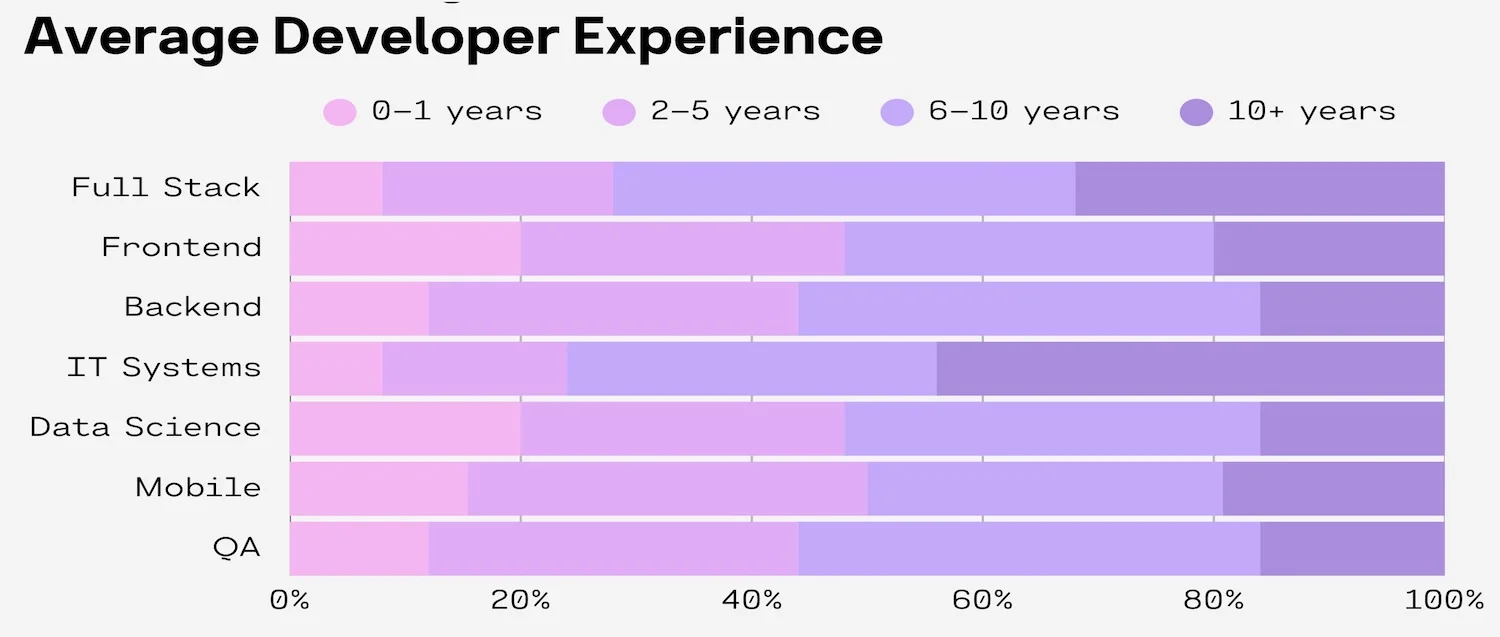
Competitive Edge: Senior-level talent pool with Latin American focus
CloudDevs is a rapidly growing tech talent platform focused primarily on connecting companies with pre-vetted software developers.
Unlike mass-market freelance marketplaces, CloudDevs is more of a premium, curated talent provider that enables fast matching between businesses and skilled professionals in software engineering, full-stack development, mobile app development, UI/UX design, and emerging tech fields like cloud computing and AI.
CloudDevshas gained strong traction among startups, SaaS companies, and mid-market businesses looking for senior engineers who can integrate into teams immediately. Its brand is built heavily around reliability, time-zone compatibility, English fluency, and fast onboarding, often within 24-48 hours of the initial client inquiry.
It supports flexible hiring modalities: companies can bring on developers for short-term projects, part-time or full-time remote roles, all on pay-as-you-go rolling contracts with no long-term commitment. [4]
9. Catalant
Founded: 2013Users/Talent: 100,000+ independent consultants
Competitive Edge: Large, vetted pool of independent consultants and boutique firms
Catalant connects companies with a large network of independent consultants, boutique consulting firms, and subject-matter experts. Unlike mainstream freelance platforms that focus heavily on creative or technical gig work, Catalant is rooted in the management consulting, strategy, finance, and business problem-solving ecosystem.
Their top-tier professionals include former Fortune 500 leaders and ex–Big 3 Engagement Managers and Partners. The network averages 19+ years of experience and includes over 10,000 experts with Fortune 500 backgrounds and more than 8,000 professionals from top consulting firms.
This allows companies to hire a single specialist, assemble a team, or work with a boutique consulting firm.
Catalant also invests in algorithms and data-driven matching to suggest consultants whose experience aligns with the client’s problem. This “platform intelligence” helps reduce time-to-match, improves fit quality, and enhances transparency for clients. [5]
8. PeoplePerHour
Founded: 2007Users/Talent: 3 million+ freelancers
Competitive Edge: Strong UK & European market presence
PeoplePerHour (PPH) is one of Europe’s most established freelance marketplaces, recognized for connecting businesses with independent professionals across design, development, writing, marketing, and a wide range of digital services.
One of PPH’s key features is its “Hourly rates:” fixed-price, pre-packaged services offered by freelancers. These packages allow clients to purchase a task or deliverable instantly, much like buying a product in an online store.
This hybrid structure (bidding + gig packages) creates a unique marketplace dynamic. Freelancers can win long-term projects through bidding while also generating recurring revenue through Hourlies.
PPH claims to have 3 million rated freelancers across 8,766 skills. The platform has completed over 1 million projects for businesses and has paid out more than £150 million to its freelancers.
7. Gigster

Users/Talent: 50,000+ experts
Competitive Edge: Full project management & end-to-end delivery
Gigster assembles on-demand software development teams for companies that need full product builds, rapid prototypes, or enterprise-grade engineering support.
Unlike conventional freelance marketplaces that connect individual freelancers with clients, Gigster operates as a managed service marketplace, delivering end-to-end software projects using curated teams of 50,000+ designers, developers, product managers, and project leads.
Instead of browsing freelancer profiles, clients submit project requirements, and Gigster assembles a personalized team optimized for skill set, timeline, and complexity. Every project includes a project manager (or Gigster “engagement manager”) who oversees delivery, communication, and quality control.
The platform emphasizes AI-driven project management. It uses automation to monitor team performance, estimate deadlines, identify risk gaps, and ensure quality consistency. This helps deliver enterprise-level predictability and reduces project overruns — a major pain point in traditional freelancing models.
Clients receive dashboards, progress insights, and milestone tracking, making the platform more structured and managed than typical talent marketplaces.
You can say Gigster is a combination of a talent network and a tech consultancy. It offers clients the agility of freelancing with the reliability of agency-level execution.
6. Guru
Founded: 1998Users/Talent: 2 million registered users
Competitive Edge: Flexible payment & contract models
Before platforms like Upwork and Fiverr gained prominence, Guru already facilitated remote work relationships between independent professionals and businesses worldwide. It’s a stable, professional, long-term work marketplace that offers consistency, transparent billing, and a reputation-based ecosystem.
Gugu is popular among long-term remote teams and recurring client-freelancer relationships. Many independent contractors on the platform handle repeat clients for months or years, with workflows supported by Guru’s extensive WorkRoom system, a collaboration and project-management tool designed to facilitate contracts, milestone planning, communication, and file sharing. [6]
It follows a commission-based model, charging service fees on freelancer earnings. The fee depends on the membership plan (basic users pay a higher percentage, while paid plans have lower fees). In general, the fee ranges from about 5.95% to 8.95%, depending on the chosen plan.
Guru has processed over 1 million paid invoices, with freelancers receiving more than $250 million in total payments through the platform. The company also claims a 99% customer satisfaction rate among clients.
5. Topcoder
Users/Talent: 1.9 million professionals
Competitive Edge: Crowdsourcing + competition-based model
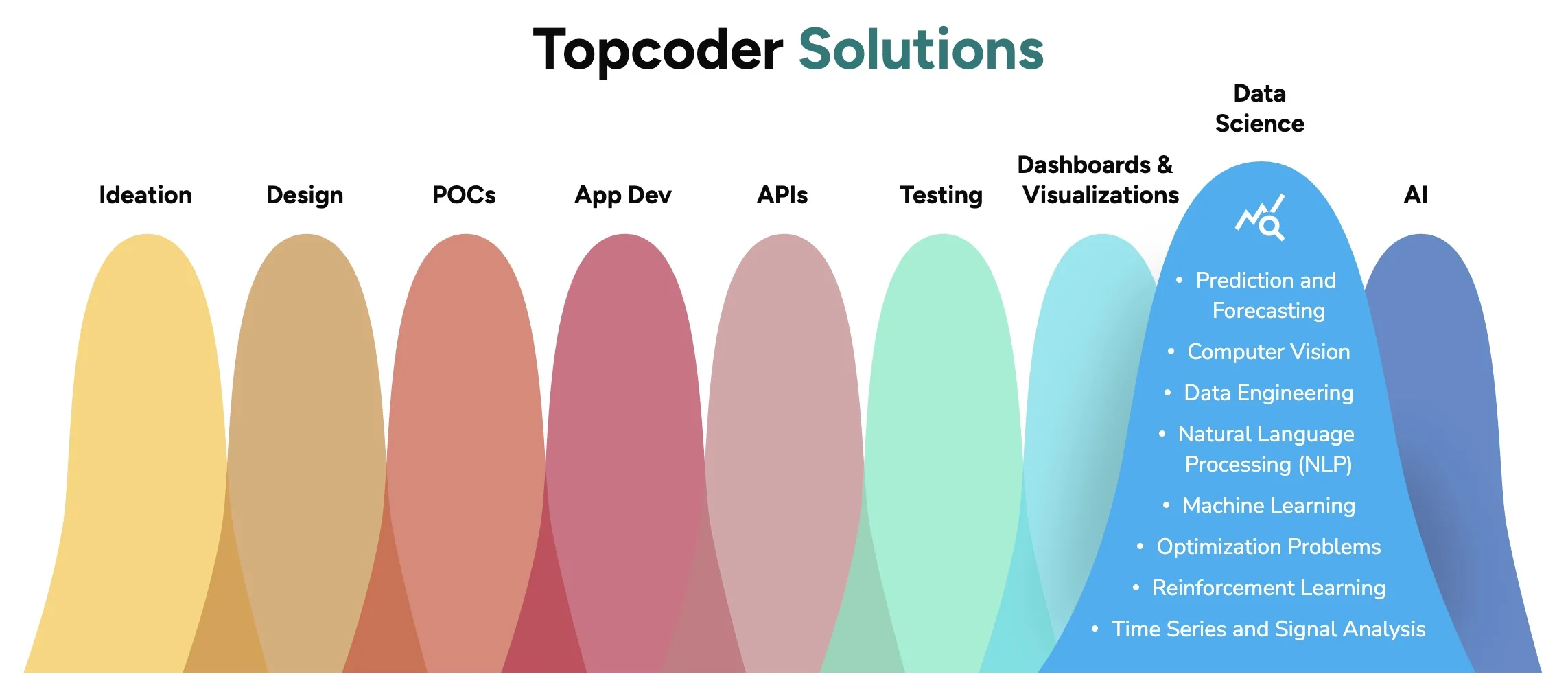
Topcoder is one of the oldest crowdsourcing and competitive programming platforms, famous for its coding competitions, algorithmic challenges, hackathons, and design contests. It is widely known for its Topcoder Open (TCO), one of the world’s premier competitive coding tournaments that attracts elite programmers and innovators annually. [7]
Topcoder differs dramatically from conventional freelance platforms. Instead of focusing on one-to-one client–freelancer engagements, it uses a crowd-competition model, where companies post challenges and multiple participants submit solutions.
The client then selects the best solution, and winners receive prize payments. This model is ideal for complex algorithmic problems, data science, challenges, application prototyping, UI/UX design, and rapid innovation cycles.
Their community and scale are impressive: the platform has a network of over 1.9 million professionals speaking 100+ languages.
Plus, Topcoder runs hundreds of thousands of “successful challenges” for clients, showcasing both high demand and active participation from freelancers globally.
4. Turing
Founded: 2018Users/Talent: 4 million developers
Competitive Edge: AI-powered vetting & matching
Turing.com is a technology services platform that connects companies with re-vetted, remote software engineers and developers, offering a “talent-cloud” for on-demand engineering and project staffing.
Instead of operating like an open bidding freelance marketplace (where many freelancers compete for posted jobs), Turing emphasizes vetting, matching, and quality control. Developers go through a rigorous assessment (including coding tests, skill challenges, and interviews) before qualifying for Turing’s talent pool.
Once vetted, Turing’s “AI-powered matching engine” helps companies quickly find suitable developers based on required skills, seniority level, timezone, and other criteria.
The platform hosts more than 4 million vetted AI and engineering talent profiles, drawing professionals from 100+ countries. It maintains an impressive 97% engagement success rate with matched talent, and companies typically find the right expert in around four days.
Turing.com has gained popularity among US and European tech firms facing local shortages of engineering talent.
In recent years, their business model has expanded beyond “just remote developer staffing.” They are focusing more on a hybrid offering: remote talent + enterprise-grade tech services and AI-powered development & consulting, blurring lines between a contract marketplace and a full-blown outsourced tech services company. [8]
3. Toptal
Founded: 2010A new era of high-performance sales is here. With Toptal, companies get access to the top 3% of sales talent and tailored solutions, powered by cutting-edge technology and proven expertise. Scale faster, convert better, and outperform targets with end-to-end sales solutions. Find… pic.twitter.com/0LqaUEI6w7
— Toptal (@toptal) September 17, 2025
Users/Talent: 20,000+ professionals
Competitive Edge: Rigorous vetting & elite talent pool
Toptal is a selective freelance talent network built around the concept of providing companies with access to the top 3% of global remote talent.
Unlike mass-market freelance platforms with millions of applicants, Toptal’s entire brand is anchored on quality, exclusivity, and rigorous vetting. It receives more than 200,000 applications, and fewer than 3% of applicants are accepted into the network.
Because of this selective model, Toptal’s freelancers are typically seen as senior, expert-level, or top-tier talent. Most clients on Toptal are startups, enterprises, or established companies seeking high-skill, reliable professionals for important projects (not small gigs).
The network focuses primarily on software engineers, designers, finance experts, product managers, AI specialists, and project managers. They serve over 30,000 clients worldwide.
For freelancers, it’s a path to high-paying, high-quality work globally, often with more stability, better rates, and less competition than general-purpose freelance marketplaces.
2. Freelancer.com
Founded: 2010Users/Talent: 85 million+
Competitive Edge: Massive global user base, Quick bids & many proposals
Freelancer.com is one of the oldest online freelance marketplaces known for pioneering global crowdsourcing and remote digital labor at scale.
It employs a dual-format model: projects and contests. Businesses can post a project and receive bids from freelancers across fields such as software development, graphic design, marketing, writing, engineering, and science.
Alternatively, they can hold contests where dozens or even hundreds of freelancers submit design options, prototypes, or creative assets, and the buyer pays only for the winning entry.
The platform connects more than 85.4 million employers and skilled freelancers from 247+ countries and regions. It has a strong presence in price-sensitive markets such as India, Pakistan, Bangladesh, Southeast Asia, and Eastern Europe.
It also offers ancillary services like Freelancer Enterprise, Freelancer Local Jobs, escrow services, time tracking, and API integrations. Freelancer Enterprise, for example, serves corporate clients looking to leverage global crowdsourcing for product innovation, competitive prototyping, and large-scale digital projects.
Compared to Upwork’s more sophisticated and professionalized talent marketplace, Freelancer.com often appeals to entrepreneurs and individual buyers who prioritize affordability and speed over deep vetting. Upwork attracts more long-term engagements and enterprise spend, while Freelancer.com thrives in short-term, budget-sensitive, and contest-driven project types.
1. Fiverr
Users/Talent: 155 million user accounts
Competitive Edge: Gig-based simplicity & low entry barrier
Fiverr has reshaped how businesses purchase creative and digital services online. Launched with the idea of every service could be sold for as little as $5, the platform has grown into a global ecosystem generating over $420 million annually.
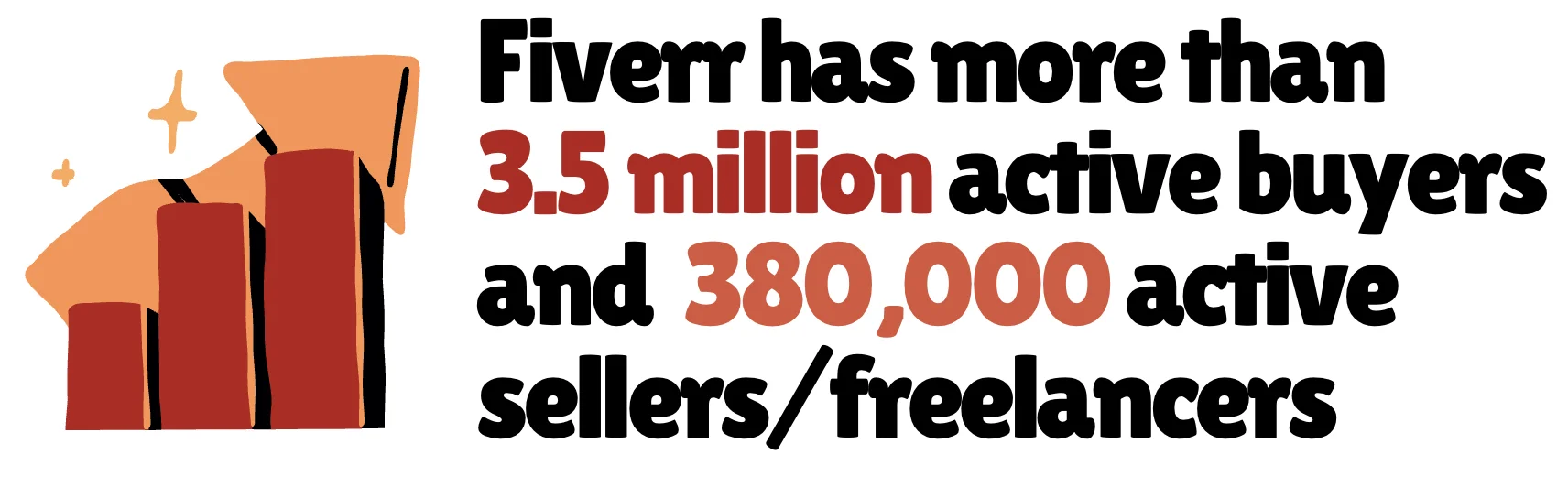
It connects approximately 150 million user accounts to 3.5 million active buyers, enabling fast, on-demand access to 700+ distinct service categories, including graphic design, programming, animation, consulting, and AI services.
Unlike traditional freelancing frameworks, where buyers post jobs and freelancers bid, Fiverr’s marketplace operates like an e-commerce store for services. Sellers create pre-packaged offerings (“Gigs”) with fixed prices, delivery dates, tiers, and add-ons.
For buyers who need quick, relatively low-cost services, Fiverr often offers a faster and cheaper solution than Upwork. The barrier to entry for buyers is typically lower: browsing gigs is simpler, pricing can be very competitive, and turnaround times are often shorter.
The annual spend per buyer on the platform rose to $330 from $295 in 2024, indicating that while active buyers may have decreased, those who remain are spending more on average. [9]
Read More
- 23 Free Social Network Analysis Tools
- 30 Crowdfunding Websites To Turn Your Dream Project Into Reality
- News Releases, Upwork reports Q1 2025 financial results, Upwork
- Industry Analysis, The global freelance platforms market size, GrandViewResearch
- How the platform works, Professional graphic designers available worldwide, 99designs
- Pricing Calculator, Rates range from $45 – $75 per hour, CloudDevs
- Our Capabilities: Accelerate digital innovation and harness AI’s power, Catalant
- WorkRoom, We provide a dedicated workspace for every job, Guru
- Topcoder Open, The ultimate designing and programming tournament, Topcoder
- Hessie Jones, Turing wants to unleash human potential through AI-powered tech services, Forbes
- Press Release, Fiverr announces third quarter 2025 results, Fiverr