
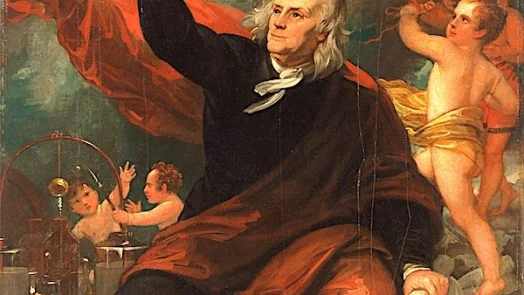
Benjamin Franklin gets all the credit for discovering electricity, but all he did was establish a link between lightning and electricity. Charles François Fay, Luigi Galvani, Alessandro Volta, Michael Faraday, Thomas Edison, and Nikola Tesla...

Osmosis is an example of diffusion in which molecules tend to distribute themselves evenly in space. Unlike diffusion, which can take place in all mediums (gas, liquid, and solid), osmosis only occurs in liquids and (very often in) gases. What...
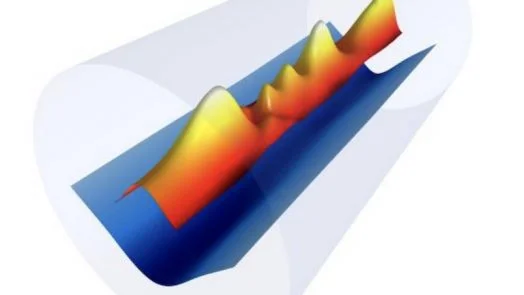
The new plasma accelerator can generate electron beams with energies up to 7.8 billion electron volts in just 20 centimeters. This is almost double the previous record for energy generated by plasma acceleration (set in 2014). To...

The World Meteorological Organization recognizes more than a hundred different types of clouds. However, they can be categorized into 10 main types based on their overall shape and the altitude where they form. Clouds are classified and named using...

The density (more precisely, the volumetric mass density) of a substance is its mass per unit volume (denoted in kg/m3). It is a unique physical property of an object that shows how tightly matter is packed together that object. Solid materials like...
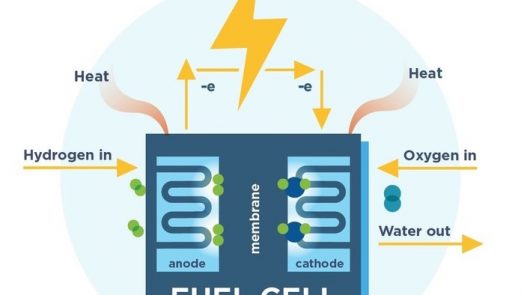
Thermal energy refers to the energy possessed by an object due to the movements of particles within the object. It’s the internal kinetic energy of the object, which comes from the random movements of the object’s molecules and atoms...

A mixture is a physical blend of two or more compounds. Each compound retains its own characteristics in the mixture. Scientists recognize two types of mixtures: homogeneous and heterogeneous mixtures. In the overview article, we’re going to...
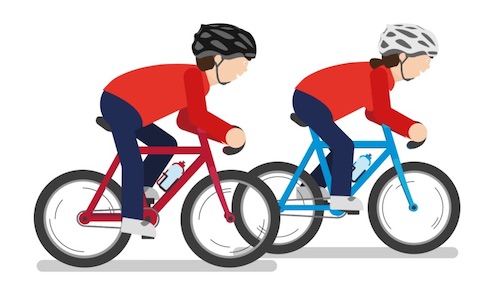
Kinetic energy is the energy of motion: if something is moving, it is said to have kinetic energy. According to classical mechanics, the kinetic energy (E) of a non-rotating object depends on its mass (m) and velocity (v). E = ½mv2 Since energy is a...
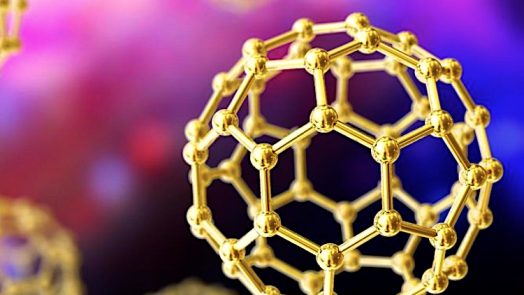
Nanomaterials have become a trending area in science and technology. Numerous metal nanomaterials have been extensively studied for a wide range of applications. Among them, gold nanoparticles have been found to be highly remarkable. They have...
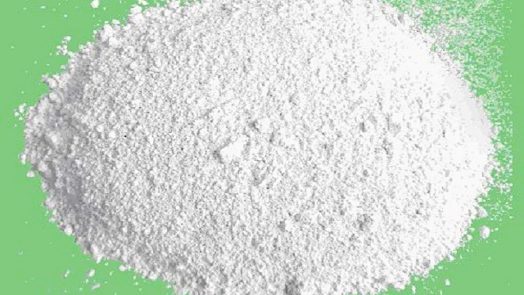
In chemistry, a base can be defined as a substance that dissociates in an aqueous solution to form Hydroxide ions (OH− ). A weak base is a base that doesn’t completely dissociate into its constituent ions when dissolved in a solution. Some...

A chemical change is a process in which one or more substances are converted into one or more new and different substances. These substances can be either chemical elements or compounds. Chemical changes occur as the result of chemical reactions...
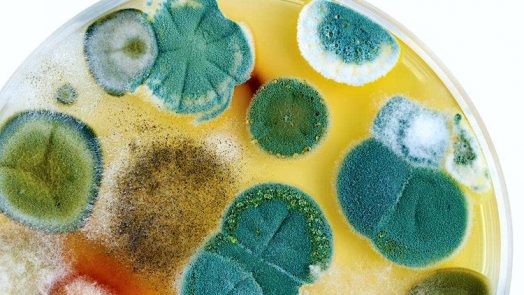
A decomposer is an organism that breaks down complex organic matter from dead or decaying organisms to obtain energy. It may sound unpleasant, but decomposers do nature’s dirty work. They eliminate dead or dying organisms, and while doing so...