
Japan holds a uniquely dominant position in the global two-wheeler industry, shaping how motorcycles are designed, manufactured, and priced across continents.
What makes this dominance remarkable is that Japan’s domestic motorcycle market is relatively small, with annual new registrations hovering around 350,000, a fraction of markets like India or China.
One of the defining characteristics of Japanese motorcycle companies is their export-first business model. In 2024, the country produced nearly 639,380 motorcycles, but many were exported to Europe and North America. The export value was roughly $3.3 billion, ranking among the top three global exporters (behind China and Germany). [1][2]
Technologically, Japanese companies have set industry benchmarks for engine durability, fuel efficiency, and reliability. It is common for their motorcycles to exceed 200,000-300,000 km of operational life with routine maintenance.
In the sections below, I highlight the top Japanese motorcycle brands, ranging from affordable, everyday bikes popular in Southeast Asia to high-performance machines built for riders in Europe and North America.
Did you know?Japan’s overall two-wheeler market was valued at $969.6 million in 2025 and is expected to grow to $1.19 billion by 2031, at a 3.56% CAGR. In contrast, the street motorcycle segment, though smaller, is set to grow much faster, at an estimated ~15.28% CAGR through 2035. [3][4]
Table of Contents
1. Honda Motor
Founded in 1946Annual Revenue: $6.35 billion+ (from motorcycles)
Popular Models: Activa, Super Cub, CB series, Gold Wing
Competitive Edge: Massive scale and market share, Engineering reliability
Honda Motor is not just Japan’s largest motorcycle manufacturer but arguably the most influential motorcycle maker in history. Since its inception, the company has produced over 500 million motorcycles globally.
These motorcycles are sold in 160+ countries, with Asia, Africa, and Latin America accounting for the bulk of volume growth. India alone contributes over 6 million Honda-branded two-wheelers per year, making it Honda’s single largest motorcycle market globally.
While the company also makes cars and power equipment, its motorcycle business is a giant on its own. In FY 2025, Honda sold around 20.2 million motorcycles worldwide, accounting for nearly 40% of global motorcycle sales — a remarkable share for any manufacturer.
The company is now focusing on both traditional internal-combustion engine (ICE) bikes and next-generation electric motorcycles. They plan to launch roughly 30 electric motorcycle models by 2030 and sell 4 million electric units annually by that year. [5]
2. Yamaha Motor
Annual Revenue: $16.4 billion+
Popular Models: MT series, FZ series, R15, R1
Competitive Edge: Design-led differentiation, Engine performance
Yamaha Motor began as a motorcycle manufacturer in 1955 and quickly made a name for itself in performance and design excellence. The company’s first motorcycle, the YA-1 125cc, won its class in the Mount Fuji Ascent Race the same year.
Over the ensuing decades, Yamaha broadened its lineup to include commuter motorcycles, sports bikes, scooters, and eventually advanced off-road and hybrid/electric machines.
In the motorcycle segment, Yamaha is well-known for balancing sporting performance, advanced technology, and rider-focused engineering. These features are reflected in beloved models like the YZF-R1, MT-series, and FZ-series.
The company produces millions of motorcycles every year. In 2024, it sold about 4.83 million units globally (showing a 4.4% year-over-year increase), with Asia accounting for a large share of those sales. [6]
It continues to innovate in product design. The Yamaha FZ S Hybrid, introduced in India in 2025, is one of the first hybrid commuter motorcycles in its segment. Plus, it has invested in Electric Motion SAS and jointly developed the Yamaha YE-01 electric motocross concept, displayed at EICMA 2025
3. Suzuki Motor
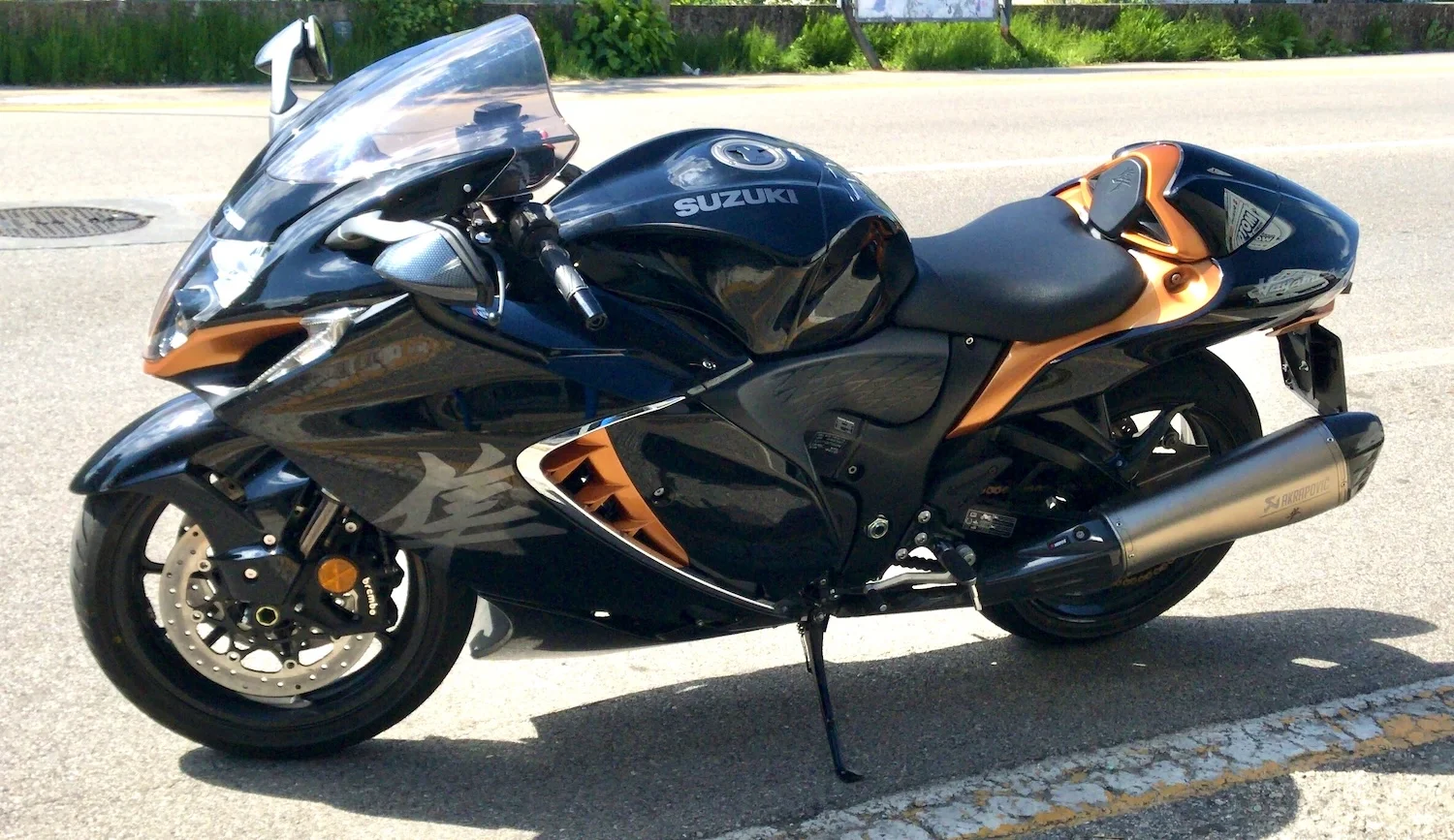 Suzuki GSX 1300 R Hayabusa
Annual Revenue: $13 billion+ (from motorcycles)
Popular Models: GSX-R series, Hayabusa, V-Strom
Competitive Edge: Value-oriented reliability, Mechanical simplicity
Suzuki Motor is a diversified mobility company with roots stretching back to 1909. The company initially built weaving machines and gradually evolved into a global maker of automobiles, motorcycles, outboard marine engines, and more.
Suzuki entered the two-wheeled transportation industry in 1952. Its first motorized product was the Power Free, an inexpensive and easy-to-maintain motorized bicycle. By 1953 and thereafter, Suzuki’s motorcycle portfolio expanded with models like the Diamond Free that helped establish its early reputation.
Over the decades, the company built a reputation not just for commuter-friendly bikes but also for high-performance machines. Iconic sportbikes like the GSX-R series and the legendary Hayabusa pushed performance boundaries.
However, Suzuki’s competitive edge lies in lightweight engineering and mechanical simplicity. It avoids unnecessary complexity, enhancing durability and lowering ownership costs, which is crucial in emerging markets.
The company holds over 19,180 patents worldwide, with more than 81% currently active. Most of these patents are filed in Japan, followed by India and Germany. [7]
In terms of sales performance, Suzuki Motor reported 2.064 million units sold in FY 2025, a 7.9% increase over the previous fiscal year. Looking ahead, Suzuki’s 2030 strategy (centered on automobiles and EVs) includes a multi-trillion-yen investment plan, with a strong focus on India. [8]
4. Kawasaki Heavy Industries
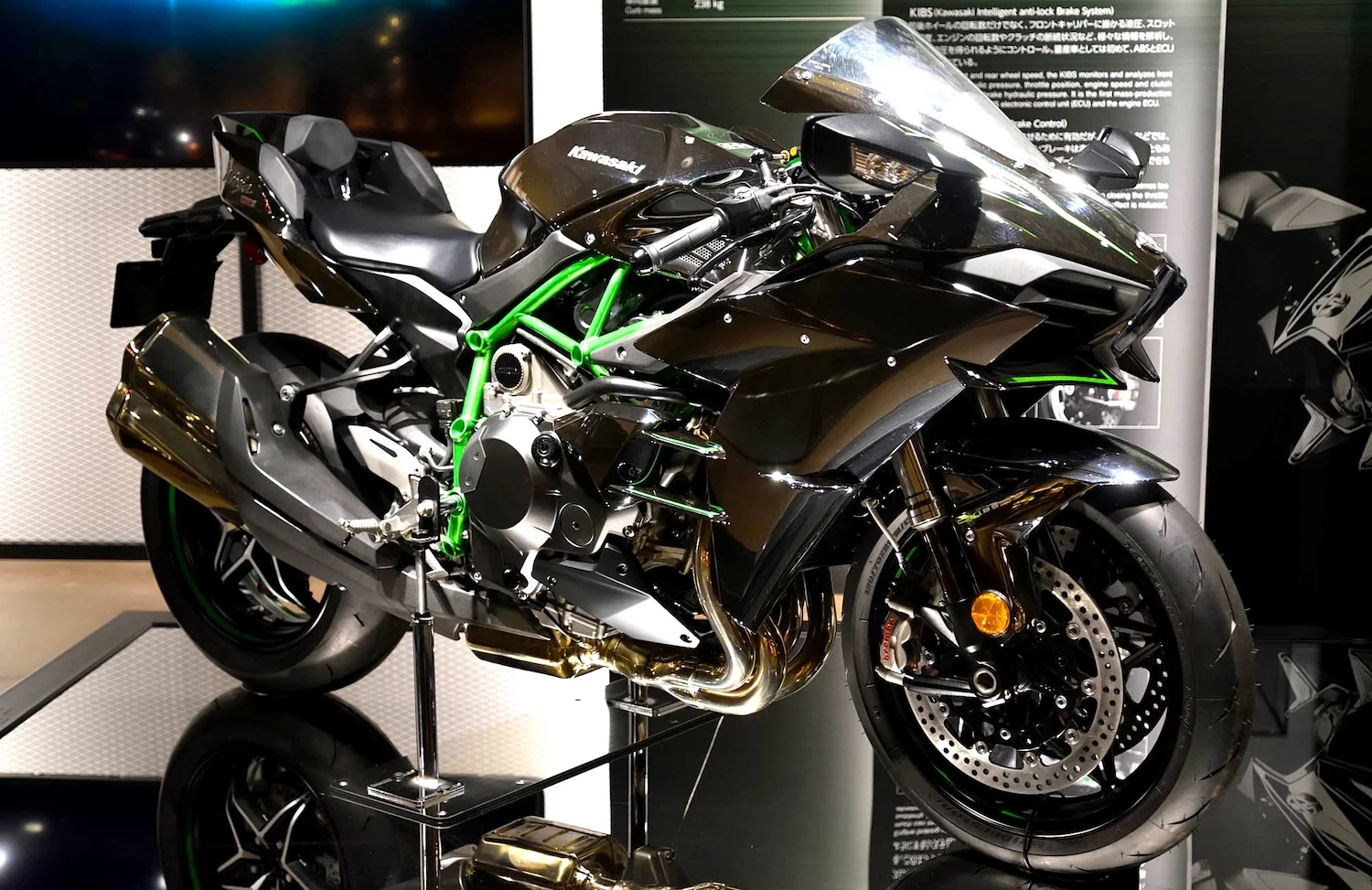 Kawasaki Ninja H2
Annual Revenue: $14.9 billion (for the whole group)
Popular Models: Ninja series, Z series, Versys
Competitive Edge: Raw performance, Engineering extremity
Kawasaki Heavy Industries (KHI) is a major Japanese engineering conglomerate with a legacy spanning over 130 years. Over time, it expanded into numerous sectors beyond just motorcycles, including aerospace, shipbuilding, rolling stock, energy systems, and heavy machinery.
The motorcycle business is a key part of Kawasaki’s Powersports & Engine segment, under Kawasaki Motors, a wholly-owned subsidiary spun off from KHI in 2021 to focus exclusively on consumer-facing products.
Kawasaki motorcycles are disproportionately concentrated in mid- to large-displacement segments, particularly 400cc and above, where profit margins and brand visibility are significantly higher.
These motorcycles are known globally for sport performance, advanced engineering, and distinctive green branding. Legendary models like the Kawasaki Z1 shaped the Universal Japanese Motorcycle concept in the 1970s, while newer sport bikes like the Ninja series continue to define high-performance segments. [9]
In developed markets such as North America, Europe, and Australia, Kawasaki is one of the top-selling brands in the sport and naked bike categories. In 2024, the company sold around 478,125 units worldwide.
Kawasaki is also pushing beyond traditional petrol-powered bikes. A good example is the Ninja Z7 Hybrid, which combines a conventional combustion engine with electric assist for improved efficiency and performance.
5. Honda Racing Corporation
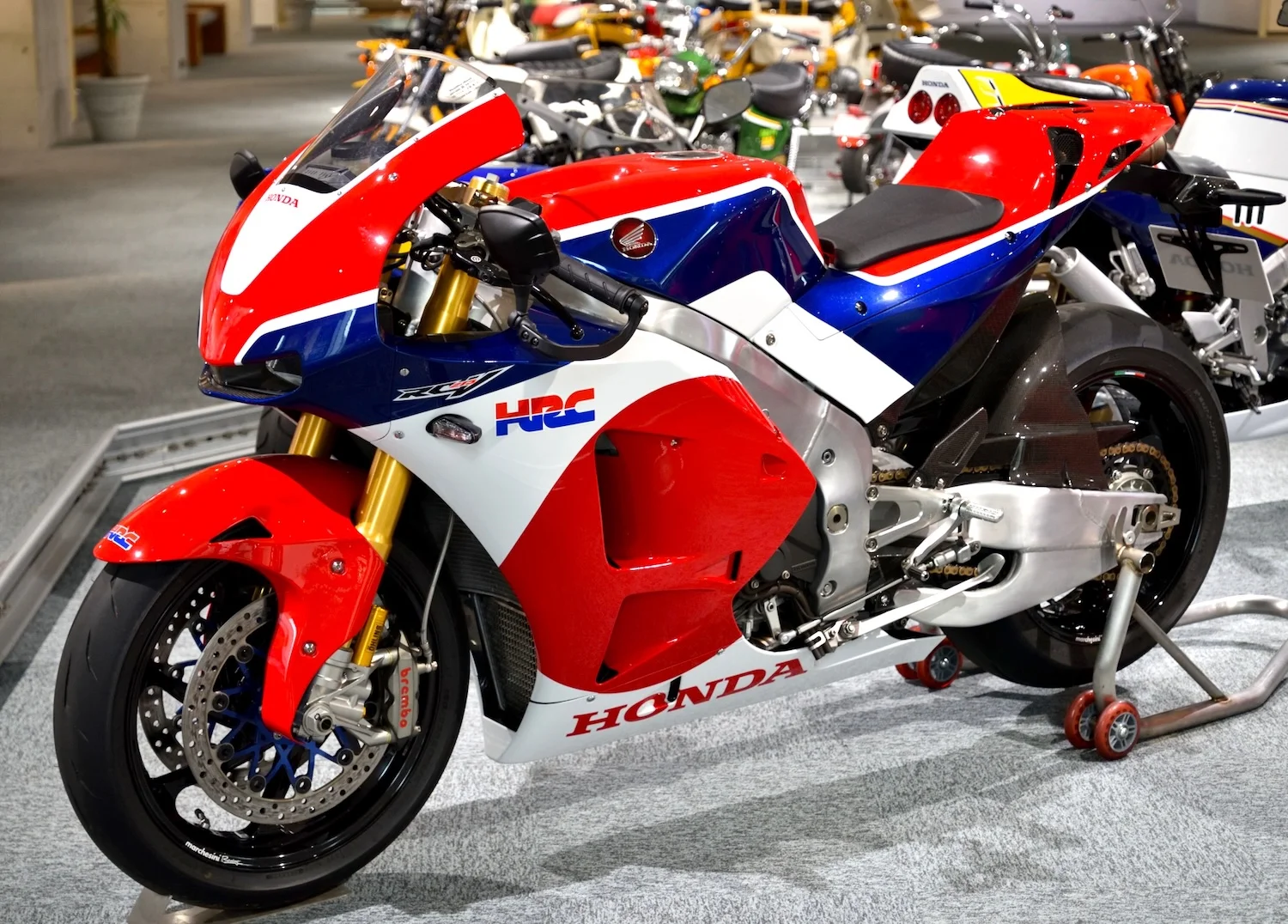 Honda RC213V-S
Parent: Honda
Popular Models: RC213V (MotoGP)
Competitive Edge: Numerous MotoGP titles and global race victories
Honda Racing Corporation (HRC) is an elite motorsports and performance engineering arm of Honda Motors. It develops race-winning machines across MotoGP, World Superbike, motocross, endurance racing, and rally disciplines.
Although it does not operate as a mass-market motorcycle manufacturer, its influence on Honda’s motorcycle identity and product engineering is disproportionately large.
Their RC-series race bikes, such as the RC213V, represent some of the most advanced motorcycles ever built, producing 300+ horsepower, weighing under 160 kg, and integrating cutting-edge electronics, aerodynamics, and materials science.
HRC’s engineering feat is reflected in its championship pedigree. It has more than 70 Constructors’ titles and over 60 Riders’ World Championships in Grand Prix motorcycle racing alone. [10]
The company operates as a high-intensity R&D and talent hub, directly driving performance improvements. Its work shapes engine design, electronics tuning, suspension setup, and aerodynamics in flagship models like the CBR series and Africa Twin.
In fact, a significant share of Honda’s premium motorcycle innovation comes directly from racing-based research and on-track validation.
6. Yamaha Motor Racing
Founded in the 1950sParent: Yamaha Motors
Popular Models: YZR-M1 (MotoGP)
Competitive Edge: Chassis mastery, Rider-centric engineering
Yamaha Motor Racing is the official motorsport division of Yamaha Motor, created to advance competitive performance, technology development, and global brand strength through motorcycle racing.
Unlike some rivals that prioritize outright dominance through scale, Yamaha Motor Racing has historically focused on rider ergonomics, balance, throttle precision, and chassis communication.
Although this division does not generate mass-market revenue, its contribution to brand equity, technical validation, and product differentiation is substantial.
It operates as a specialized, high-intensity R&D ecosystem. Engineers, test riders, and data analysts work closely with Yamaha’s production teams, ensuring racing insights flow rapidly into road-going motorcycles.
The division is best known globally for its MotoGP presence, where it competes as the Monster Energy Yamaha MotoGP Team with prototype machines like the Yamaha YZR-M1, a bike that has been continuously refined for top-level racing since its evolution from the 500 cc era. [11]
Beyond MotoGP, Yamaha Motor Racing is active in World Superbike (WorldSBK), World Supersport (WorldSSP), endurance racing (such as the Suzuka 8 Hours), and youth talent cups, including the bLU cRU initiative.
7. Moriwaki Engineering
Founder: Mamoru Moriwaki
Popular Models: Moriwaki MD211VF, MD600
Competitive Edge: Expertise in Chassis & Frame Engineering
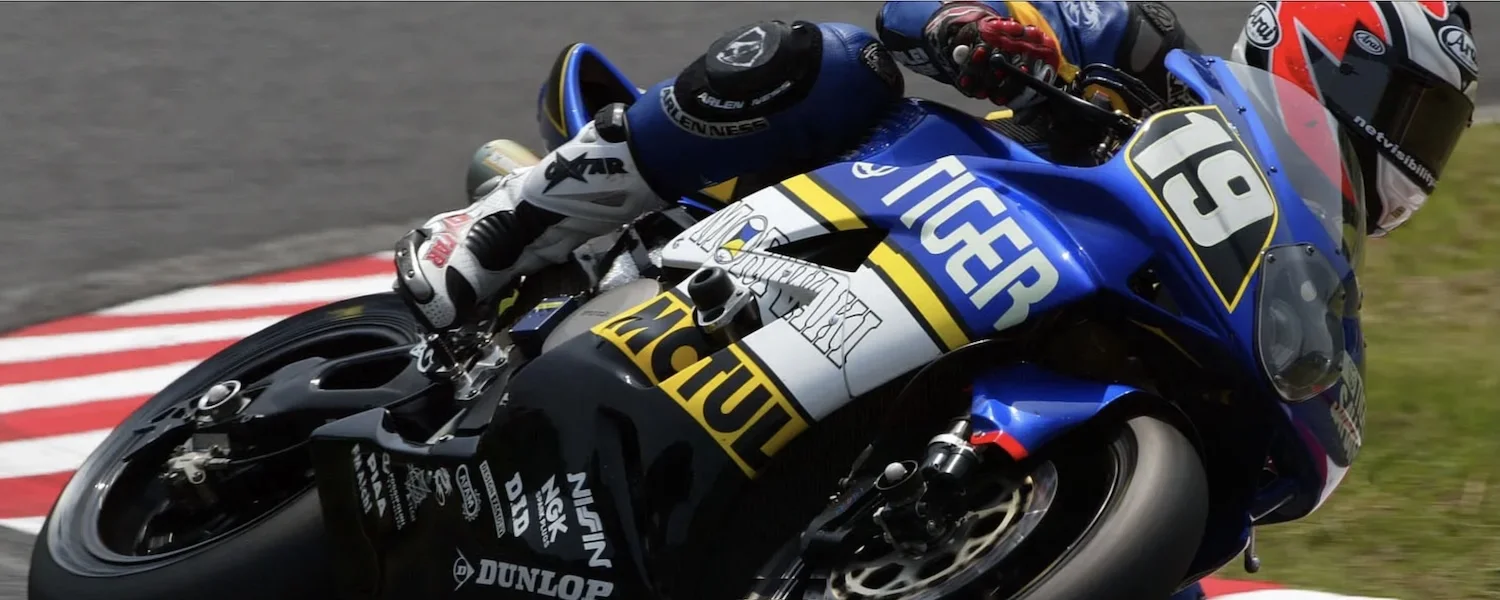
Moriwaki Engineering is popular for its high-performance parts, race chassis, and race teams that have competed globally, especially in endurance racing and world championship classes.
The company was founded by Mamoru Moriwaki, a former Honda racing engineer and close associate of Soichiro Honda. While many Japanese performance firms focused on aftermarket parts, Moriwaki went further by designing complete racing chassis, prototype motorcycles, and MotoGP-level machines.
The company’s early breakthroughs came in endurance and road racing, particularly at the Suzuka 8 Hours and Daytona 200. Its heavily modified machines, such as frame-reinforced Kawasaki Z1–series bikes, earned the nickname “Moriwaki Monster” for their speed and ability to challenge factory teams.
Globally, the Moriwaki name is strongly associated with Honda-based racing excellence, even though it operates as an independent company.
Although Moriwaki’s production volumes are extremely limited, its technical impact is outsized. Over the decades, the company has exported parts (including frames, swingarms, exhausts, and suspension linkages) and race services to North America, Europe, Asia, and Australia.
Now Defunct (but well-known) Brands
8. Rikuo Motorcycle
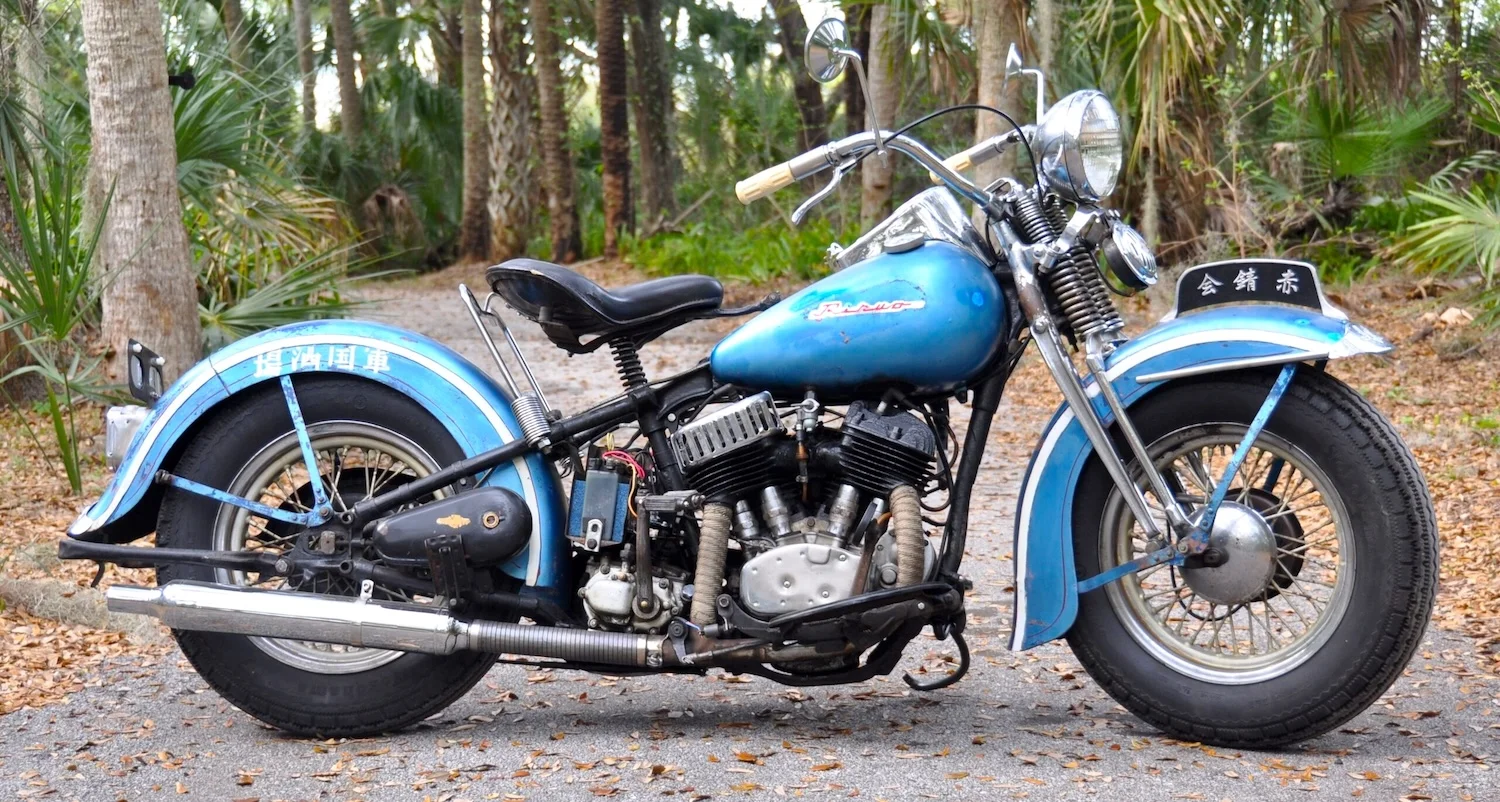 RikuoVL BluePaint
Parent: Independent
Defunct in: 1962
Historic Models: Rikuo Type 93 (750cc), Type 97 (1,200cc)
Rikuo Motorcycle was Japan’s first large-scale heavyweight motorcycle manufacturer, tracing its roots to the early 1930s.
Rather than starting from scratch, Rikuo built its motorcycles under license from Harley-Davidson, effectively transplanting American big-twin engineering into Japan and adapting it to local conditions.
These included robust V-twin motorcycles that became a staple of Japanese police forces and, later, the Imperial Japanese Army. Estimates indicate that nearly 18,000 Type 97 military motorcycles were manufactured before and during World War II, a figure rivaling Harley-Davidson’s numbers of the era. [12]
However, Rikuo never became a true mass-market consumer brand. Its identity stayed closely linked to licensed technology, heavyweight motorcycles, and institutional buyers. As lighter and more modern bikes gained popularity, Rikuo lost competitiveness and ultimately shut down operations in 1962.
9. Marusho
Founded in 1948Parent: Independent
Defunct in: 1967
Historic Models: Lilac 350, Lilac Magnum (500cc)
Marusho began production in the early 1950s and quickly distinguished itself through shaft-driven motorcycles at a time when most Japanese bikes still used chain drives. [13]
Its first prototype production motorcycle, the Lilac ML (150 cc), was recognized by the Society of Automotive Engineers of Japan as one of the “240 Landmarks of Japanese Automotive Technology.”
Over its lifespan, Marusho developed over 31 models under the Lilac name, ranging from small 90 cc step-throughs to larger shaft-driven twins.
At its peak (from 1955 to 1960), the company produced thousands of motorcycles annually. For instance, it manufactured 8,091 units in 1955 and a record 11,241 in 1959 during the height of Japan’s two-wheeler industry expansion.
However, the 1960s brought intense competition from larger Japanese manufacturers such as Honda and Suzuki. They offered lighter, more powerful, and more affordable machines. Marusho struggled to keep pace and shut down operations by the late 1960s.
10. Hodaka
Founded in 1964Parent: Hodaka Industrial
Defunct in: 1978
Historic Models: Ace series, Dirt Squirt
Hodaka holds cult-classic status in motorcycle history as one of the earliest Japanese brands to achieve commercial success in the United States, despite its relatively small scale.
The company focused on a narrow but fast-growing niche: small-displacement recreational motorcycles. At a time when American riders were discovering trail riding, desert racing, and amateur motocross, Hodaka’s bikes offered a perfect mix of simplicity, durability, and low cost.
The first Hodaka motorcycle was the Ace 90, a 90 cc two-stroke trail bike designed in Oregon and manufactured in Japan. Over its production run, the company produced a broad range of models, such as the Super Rat, Combat Wombat, Road Toad, Dirt Squirt, and Thunderdo. [14]
Despite its relatively short lifespan, Hodaka developed around 150,000 motorcycles between 1964 and 1978. Mounting financial pressure led to the end of production in 1978. The company neither moved into other vehicle categories nor merged with a larger manufacturer, and the Hodaka name gradually faded away.
11. Bridgestone Motorcycles
Parent: Bridgestone Corporation
Defunct in: 1970
Historic Models: Bridgestone 175 Dual Twin, 350 GTR / GTO
While Bridgestone’s main business has always been tire production, it briefly ventured into two-wheeled motorized vehicles. Unlike many post-war Japanese motorcycle startups, Bridgestone entered the market with strong capital backing, advanced manufacturing expertise, and deep materials science knowledge.
Production began in the late 1950s, and by the early to mid-1960s, their motorcycles were widely regarded as over-engineered masterpieces. The company focused mainly on high-revving two-stroke engines, advanced porting systems, rotary-valve induction, and precision machining.
These motorcycles were technologically superior to many contemporaries, often outperforming rivals in smoothness, top-end power, and durability (especially in mid-displacement categories). Models like the 175 Dual Twin and 350 GTR gained reputations for being fast, refined, and mechanically robust.
However, by the late 1960s, Bridgestone made a strategic decision to exit the motorcycle business due to corporate-level conflicts. Pressure grew from OEM customers who were reluctant to buy Bridgestone tires from a company that also competed with them in motorcycles.
As a result, Bridgestone ended domestic motorcycle sales in 1966 and completely stopped motorcycle production by 1970.
12. Meguro motorcycles
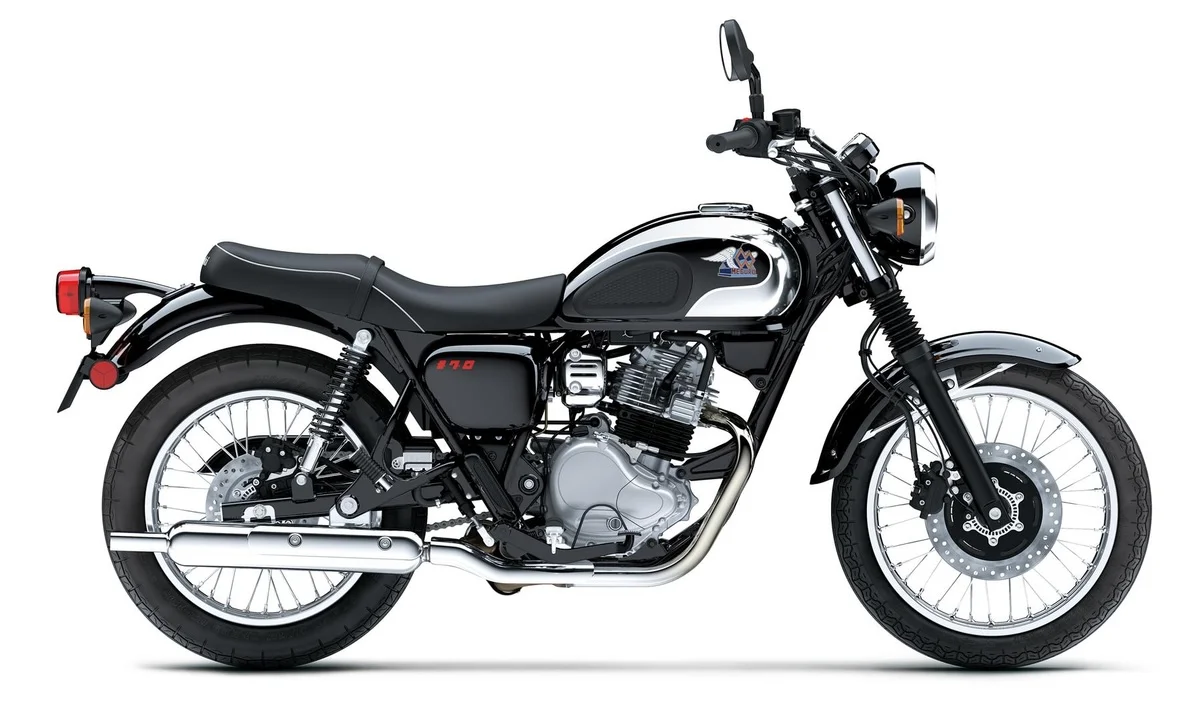 Meguro S1
Defunct in: 1964
Merged into: Kawasaki Heavy Industries
Historic Models: Meguro K2 (650cc), Meguro Junior (250cc)
Meguro was already producing large, high-quality motorcycles decades before Japan became a global motorcycle powerhouse. At a time when most Japanese makers focused on bicycles with auxiliary engines, Meguro was building serious, heavyweight four-stroke motorcycles comparable to leading European brands.
Its Z97 (a 498 cc single) released in 1937 is often credited as Japan’s first large-displacement sport motorcycle, producing about 11 hp with a top speed of about 80 km/h. The company later introduced models like the Junior J1 (248 cc), widely considered Japan’s first 250 cc four-stroke motorcycle.
However, by the early 1960s, market preferences began shifting toward lighter, more affordable motorcycles. To sustain operations, Meguro entered into a business alliance with Kawasaki Aircraft, eventually being fully absorbed by Kawasaki in 1964.
In the past few years, Kawasaki has revived the Meguro name to honor its heritage, launching retro-inspired models such as the Meguro K3 in 2021 and the Meguro S1 in 2024.
Read More
Sources Cited and Additional References- Vehicle Manufacturing, Production volume of motorcycles in Japan throughout the years, Statista
- Export Data, Japan motorcycles export data by HS code 8711, TradeImex
- Industry Report, Japan’s two-wheeler market trend analysis, TechSciResearch
- Industry Report, Japan’s street motorcycle market size and trend analysis, Spherical Insights
- Business Strategy, Delivering unique and appealing Honda motorcycles to customers worldwide, Honda
- Integrated Report, Medium- to long-term strategies, Yamaha
- Suzuki Motor Patents, Suzuki holds over 19180 patents worldwide, GreyB
- Global News, Suzuki announces growth strategy for FY 2030, Suzuki
- Motorcycles, The dawn of the Japanese sport bike, Gear Patrol
- Racing Domination, Honda has over 70 Constructors World Championships, Honda
- YZR-M1: Features 1000cc Liquid cooled inline four-cylinder with cross-plane crankshaft, Yamaha
- Daniel Feininger, Most important motorcycles of WW2, SlashGear
- CD Bohon, Marusho: Excellence wasn’t enough, CycleWorld
- Mitch Boehm, Hodaka Super Rat: the little big bike, Motorcyclist Online